Poultry · Vietnamese

Bánh Mì Gà Nướng (Vietnamese Roasted Chicken Sandwich)

Bánh Mì Gà Nướng (Vietnamese Roasted Chicken Sandwich)

The other week I did a quick poll via Twitter and Facebook asking folks what Vietnamese dishes they’d like to see on the blog—well, other than Phở 🙂

I got a range of requests from Bún (Vermicelli Noodles) to Gỏi Cuốn (Spring/Summer Rolls) and even Bánh Mì (sandwiches).

Bánh Mì Gà Nướng (Vietnamese Roasted Chicken Sandwich)

But truth be told, outside of the occasional Bánh Mì Chả Lụa (Vietnamese “Ham”/”Sausage” Sandwich), I rarely ever make Bánh Mì.

Bánh Mì Gà Nướng (Vietnamese Roasted Chicken Sandwich)

By no means is Bánh Mì difficult to assemble but I’ve always been lucky enough to have local Bánh Mì shops nearby and at under 3 bucks a pop (and that’s on the high end), I have been just darn lazy. Yup, I admit it.

Bánh Mì Gà Nướng (Vietnamese Roasted Chicken Sandwich)

At it’s base, Bánh Mì is made up of a toasted french baguette, pickled veggies, tons of cilantro, mayonnaise, and some type of protein. But don’t let it fool you. Just because it sounds simple, doesn’t mean the flavors aren’t genius!

Bánh Mì is all about balance. The great crunch from the baguette, savory flavors from the protein, bright notes from the herbs and the sweet/tangy aspects of the pickled veggies. Just Perfect.

Bánh Mì Gà Nướng (Vietnamese Roasted Chicken Sandwich)

But I realize not everyone has access to yummy Bánh Mì shops so I thought it would be fun to share a delish and easy method. For this particular Bánh Mì Gà Nướng, I used chicken thighs marinated with Chinese Five-Spice and Maggi Seasoning Sauce. In fact, this is how our mom would often marinade our poultry—including our Thanksgiving turkeys every year! The Five-Spice gives a deep, earthy flavor from the combination of star anise, cloves, and other goodness. Trust me, it’s amazing.

And with that friends—Ăn ngon! Stay tuned next week for another Vietnamese dish!

_________________________________________________________

Bánh Mì Gà Nướng (Vietnamese Roasted Chicken Sandwich)
Serves 4

Ingredients:
4 6-inch Baguette Rolls, lightly toasted and sliced lengthwise
Five Spiced Chicken*
Đồ Chua (Pickled Vegetables)*
Mayonaisse*
1 Bunch Fresh Cilantro Leaves, washed and dried
1 Jalapeno Pepper, seeded and thinly sliced
1 Small Cucumber, thinly sliced lengthwise


Five-Spice Chicken
:
6 Chicken Thighs, bone in and skin on
1 Tablespoon Five-Spice Powder
¼ Cup Granulated Sugar
2 Teaspoons Black Pepper
3 Tablespoons Minced Garlic
2 Tablespoons Vegetable Oil
½ Cup Maggi Seasoning Sauce

Đồ Chua (Pickled Vegetables):
1 Cup Carrots, julienned
1 Cup Daikon Radish, julienned
2 Tablespoons Granulated Sugar
1 Teaspoon Kosher Salt
1 Cup Rice Wine Vinegar
½ Cup Boiling Water

Mayonnaise:
2 Large Egg Yolks, at room temperature
1 Cup Vegetable Oil
1 Tablespoon Lemon Juice
1 Garlic Clove, minced
¼ Cup Fresh Cilantro Leaves, chopped (optional)
2-3 Dashes Nước Mắm (fish sauce)

Prepare the marinade for the chicken. In a large bowl, whisk together the Five-Spice, sugar, and pepper. Stir in garlic, Maggi and oil until the dry ingredients have dissolved. Submerge the chicken into the marinade, being sure to coat both sides. Cover the bowl and refrigerate for at least 60 minutes.

Meanwhile, prepare the Đồ Chua (Pickled Vegetables). In a medium sized bowl, dissolve the sugar and salt with the boiling water. Add the vinegar and allow the liquid to cool to room temperature. Add the vegetables and refrigerate for at least 30 minutes.

Prepare the mayonnaise. In a blender, add all the ingredients except the oil. Pulse several times and then slowly drizzle in the oil until the mayonnaise has properly emulsified. Refrigerate until ready for use. *You can also use jarred mayonnaise to substitute*

Preheat oven to 400 degrees F. Grease a baking sheet with oil and place the marinated chicken thighs on the sheet, skin side up. Roast for approximately 30 minutes until the chicken reaches an internal temperature of 160 degrees F. Remove the chicken and transfer to a plate. Once the chicken is cool enough to handle, remove the skin and bones and shred the meat into pieces.

Assemble the Bánh Mì. Spread a heaping spoonful of mayonnaise inside one side of each toasted baguette roll. Fill each roll with the chicken and drizzle a bit of the pan drippings over the meat. If desired, sprinkle with more black pepper. Fill the sandwiches with pickled vegetables, jalapeno and cucumber slices, and the cilantro. Enjoy!

Beef · Vietnamese

Bò Lúc Lắc Xà Lách Son (Vietnamese Shaking Beef over Watercress)

Bò Lúc Lắc Xà Lách Son (Vietnamese Shaking Beef over Watercress)

Bò Lúc Lắc was a staple in our house growing up. Mom would make it in several different variations depending on her mood—with tofu, mushrooms, fried potatoes, or over a bed of fresh and peppery watercress.

The three key components to Bò Lúc Lắc are simple and straightforward. First, you need a high-quality cut of beef for a deliciously tender Bò Lúc Lắc. Mom preferred Filet Mignon but ribeye can be substituted. Second, due to the quality of the beef, you have to stirfry the meat quickly and over high heat. And lastly, the Maggi. Completely unique in flavor, the Maggi Seasoning Sauce is referred to as xì dầu” (soy sauce) in Vietnamese–although completely different in flavor profile than your average soy sauce. In dire circumstances, you could substitute Maggi with light soy sauce. However I would highly recommend stocking up on a bottle if you ever plan on cooking Vietnamese cuisine. Trust me, it’s totally worth it.

Have a great week!

 __________________________________________________________

Bò Lúc Lắc Xà Lách Son (Vietnamese Shaking Beef over Watercress)

Ingredients:

1 Pound Filet Mignon or Ribeye Beef, cubed
1 Tablespoon Fresh Garlic, minced
1 Shallot, thinly sliced
1 Tablespoon Unsalted Butter
Maggi Seasoning Sauce
1 Bunch Fresh Watercress, washed and dried (about 3 cups)
2 Tablespoons Rice Wine Vinegar
Black Pepper
Vegetable Oil
Fried Shallots (optional)

In a large bowl, mix beef, garlic, sliced shallots, and 1 tablespoon oil. Season heavily with pepper.

Heat a large wok over medium-high heat. Add a tablespoon of oil to the pan and when it begins to slightly smoke, carefully toss in the beef. Quickly stir-fry for 2-3 minutes and remove from heat. Stir in the butter and add several dashes of Maggi to taste. In a separate bowl, quickly toss the watercress with the rice vinegar and plate. Pour the beef and the juices over the top of the watercress and season with additional black pepper. Optional: Sprinkle the top with the fried shallots.

Side Dish · Vietnamese

Xôi Gấc for Tết (Baby Jackfruit Flavored Sticky Rice)

Xôi Gấc (Baby Jackfruit Flavored Sticky Rice)

It’s hard to believe that Tết, Vietnamese Lunar New Year, is just a few days away.

Growing up, our parents used to have us scrub down the entire house the days leading up to Tết. It was one of the many important traditions we used to follow to ensure a prosperous and lucky new year. Then, the entire clan would come together, cook up a feast of goodies, offer ancestral prayers at the alter, hand out lì xì (lucky money in red envelopes) to the kids, eat, drink, laugh, and well—gamble and play cards! Needless to say, it was always a fun time.

One of the traditional dishes often found around Tết is Xôi Gấc which is essentially, glutinous rice (sticky rice) that has been steamed with coconut milk and Gấc.

Xôi Gấc (Baby Jackfruit Flavored Sticky Rice)

This is one of those Vietnamese dishes whose name just doesn’t translate well into English. The first challenge is “Gấc”.  It has several English names such as Baby Jackfruit, Cochinchin Gourd, Sweet Gourd, Momordica Charantia Fruit, and my least favorite–Spiny Bitter Gourd. I mean, c’mon now…… How unappetizing does Spiny Bitter Gourd sound? You might as well throw in some other funky words like gelatinous and congealed and call it a day.

But I digress…..

Since I’ve seen Gấc more often called “Baby Jackfruit“—–I’m going with it. But for the record, it does not taste like regular jackfruit or even “young jackfruit”. Could I BE more confusing???

Xôi Gấc (Baby Jackfruit Flavored Sticky Rice)

The flesh of the Gấc fruit is deep red and is well suited to not only flavor Xôi (sticky rice) but also naturally dyes the grains of rice to an intense orange-reddish hue. It’s because of this that you’ll find Xôi Gấc served at celebrations such as Tết and weddings since the color red is considered to be very lucky.

Although fresh Gấc can now be found in many large Vietnamese grocery stores this time of year, I couldn’t convince myself to make the trek to Orange County to pick some up. I resorted to using frozen Gấc puree that my local Vietnamese grocery store has stocked year round. If you can get it, I would HIGHLY recommend using the fresh fruit over frozen as you won’t be able to get the same rich and vibrant hue if you use the latter. Truthfully, my finished Xôi Gấc looked a tad anemic because I used the frozen puree—but it was DARN TASTY all the same.

Oh—and if being healthier is one of your New Year’s resolutions….the Gấc fruit has a supposed astronomic amount of beta-carotene and lycopene.

Xôi Gấc (Baby Jackfruit Flavored Sticky Rice)

Since Xôi Gấc has a slightly sweet profile to it, it’s best served alongside something savory like roast pork or Chả lụa (pork sausage). But it can also be enjoyed as a breakfast item as well.

And with that Dear Friends, I better get back to cleaning my house before Tết is here. But before I sign off, let me wish you and your loved ones a joyous, adventure-filled, and delicious Year of the Dragon!

Chúc Mừng Năm Mới!!

_________________________________________

Xôi Gấc (Baby Jackfruit Flavored Sticky Rice)
Serves 4-6

Ingredients:

2 Cups Sweet Glutinous Rice
12 Ounces Gấc Fruit, either fresh or frozen puree
1 Teaspoon Kosher Salt
6-8 Fresh Pandan Leaves
1 Tablespoon Mirin
1/2 Cup Coconut Milk

Rinse the rice until the water runs clear. Fill a large bowl with cool water, add the rice and soak it overnight.

Once the rice has been properly soaked, drain the rice and shake off any excess water. With a kitchen towel, gently pat the rice dry and then transfer to a mixing bowl.

While wearing gloves, massage and rub the Gấc into the rice, allowing the grains to be thoroughly covered in the fruit. Sprinkle in the salt and mix until combined.

Line the bottom of your steamer with a sheet of cheesecloth. Place a layer of pandan leaves on top of the cheesecloth and then spread the rice mixture evenly on top the leaves. Cover the rice mixture with additional pandan leaves and place the steamer lid on. Steam for about 15 minutes and then remove the lid and top layer of pandan leaves. Using chopsticks, stir in the coconut milk and mirin while fluffing the rice. Place the leaves and steamer lid back on and continue cooking for an additional 5 minutes or until rice is fully cooked. Enjoy!

Pork · Seafood · Vietnamese

Bánh Xèo (Vietnamese Sizzling Crêpes)

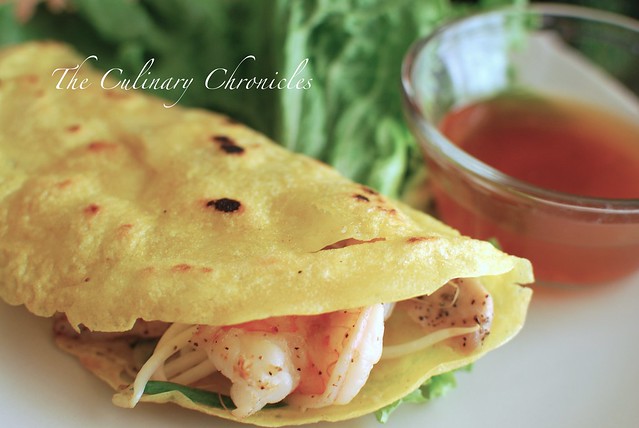
Bánh Xèo (Vietnamese Sizzling Crepe)

Bánh Xèo

Bánh = Cake

Xèo = Sound of the “sizzle” from the skillet

Bánh Xèo (Vietnamese Sizzling Crepe)

Growing up, I always considered Bánh Xèo to be a treat when my mom made them. She insisted that they needed to be eaten immediately from the skillet to maintain its crispy exterior. And unlike when you order them from restaurants, she would fill mine with tons of filling. 🙂

Bánh Xèo gets its yellow hue from the turmeric and is flavored with coconut milk. Traditionally, Bánh Xèo is filled with pork, shrimp, onions, mung beans, and bean sprouts. And just like chả giò (egg rolls), you wrap pieces of the Bánh Xèo with herbs and lettuce leave before dunking it into Nước Chấm–a fish sauce based dipping sauce. The freshness of the veggies is the perfect balance to the slightly fried crêpe.

Enjoy!

________________________________________________

Bánh Xèo (Vietnamese Sizzling Crêpes)

Batter:
1½ Cups Rice Flour
½ Teaspoon Turmeric
¼ Cup Coconut Milk
1 Cup Cold Soda Water, more if needed
½ Cup Scallions, diced
1-2 Dashes Nước Mắm (fish sauce)

Filling:
½ Pound Shrimp, peeled and cleaned
½ Pound Pork Loin, sliced thinly
½ Cup White Onion, thinly sliced
1 Tablespoon Garlic, finely diced
2 Cups Fresh Bean Sprouts
Nước Mắm (fish sauce)
Ground Black Pepper
Vegetable Oil

Nước Chm (Dipping Sauce):
½ Cup Nước Mắm (fish sauce)
½ Cup Sugar
½ Cup Fresh Lime Juice
¼ Cup Warm Water
1-2 Thai Chilies, finely diced

Accouterments:
Lettuce
Thai Basil
Mint
Cilantro
Cucumbers

In a large bowl, whisk together the rice flour and turmeric. Add in coconut milk and mix until well combined. Slowly whisk in the soda water until all the lumps have dissolved. Whisk in Nước Mắm and scallions. Set the batter aside for 30-45 minutes.

Prepare the Nước chm. Combine Fish Sauce, Sugar, Lime Juice, Warm Water and stir until sugar is dissolved. Add in chilies. Cover and set aside.

In another bowl, add in pork and shrimp. Toss with garlic, white onions, a few splashes of Nước Mắm, and pepper. Heat a pan with a few tablespoons of oil to medium-high heat. Add the mixture and cook for a few minutes until the pork and shrimp are almost done. Remove from pan.

In a large nonstick skillet, add 1-2 tablespoons of oil. Stir the batter and carefully spoon a ladleful into the skillet. Tilt and swirl the pan to coat the bottom evenly. After 1-2 minutes, place some of the pork/shrimp mixture on one half of the skillet. Top with the bean sprouts. Cover and cook for 1-2 minutes. Remove lid and drizzle a little bit of oil on the outer edge of the crêpe. Cover the skillet for another 2-3 minutes. Using a spatula, carefully fold the crêpe in half, gently pressing down on top. Transfer to a plate. Serve with lettuce, mint, cilantro, thai basil and nước chm (dipping sauce).


This is my submission to the final Delicious Vietnama monthly blogging event celebrating Vietnamese cuisine started by Anh of A Food Lover’s Journey and Hong & Kim of  Ravenous Couple. Thank You Anh, Kim, and Hong!

Beef · Vietnamese

Thịt Bò Nướng Lá Lốt (Vietnamese Grilled Beef Wrapped in Betel Leaves)

Thịt Bò Nướng Lá Lốt (Vietnamese Grilled Beef Wrapped in Betel Leaves)


Growing up, whenever my family celebrated a special occasion or holiday, we would head out to enjoy Bò 7 Món – 7 courses of beef. This may seem strange as Vietnamese cuisine isn’t really known for heavy amounts of beef but maybe that’s why this specialty is often saved for momentous occasions.

These days you can find many restaurants that offer Bò 7 Món, but in my family’s opinion, no one does it better than Pagolac Restaurant in Westminster, California.


Thịt Bò Nướng Lá Lốt (Vietnamese Grilled Beef Wrapped in Betel Leaves)

My family has been coming to Pagolac Restaurant for over 20 years. Most of the dishes you order, you cook yourself on table top grills or mini boiling pots of vinegar water. All proteins are meant to be wrapped in the rice paper sheets with assorted veggies then dipped in a very pungent and savory sauce called mắm nêm.

And although there are a standard set of items when eating  Bò 7 Món, my family typically orders à la carte as there are some of the dishes that just aren’t our fav. We always order the thinly sliced beef, shrimp, squid, meatballs with shrimp crackers—and my personal favorite, Thịt Bò Nướng Lá Lốt  or Grilled Beef Wrapped in Betel Leaves. I would always plead for my mom to order extra plates of it as the dish was amazing to me. Just the right mixture of spices in the beef and all enveloped in the fragrant betel leaves that tasted even better slightly charred from the grill.

Thịt Bò Nướng Lá Lốt (Vietnamese Grilled Beef Wrapped in Betel Leaves)

Betel leaves are used quite often in Việt Nam in food, medicine and also as a “chew” to produce a kind of stimulant.Though, the latter does cause some serious ICK counter effects over extended amounts of time such as black teeth.  Yikes! However, the leaves are quite fragrant and literally produces a trigger effect for my mouth to start watering when I smell it being grilled.  🙂

Thịt Bò Nướng Lá Lốt (Vietnamese Grilled Beef Wrapped in Betel Leaves)

Once wrapped and grilled up, Thịt Bò Nướng Lá Lốt can be enjoyed a number of ways…..with rice or vermicelli noodles and even as a đồ ăn nhậu (beer food). But my favorite is to wrap some in Rice Paper Sheets (bánh tráng) and throw in a few veggies such as the pickled cucumbers or carrots. Delicious balance in texture and taste!

Thịt Bò Nướng Lá Lốt (Vietnamese Grilled Beef Wrapped in Betel Leaves)

Truth be told, I can’t recall a time when Mom made Thịt Bò Nướng Lá Lốt at home but that doesn’t stop me from associating them with her.  Because when I think about this dish,  it makes me reflect on happy, celebratory times and images of Mom come flooding back to me as she stood over the table top grills at Pagolac Restaurant laughing and distributing all the sizzling items to our plates.

And when all is said and done, anything that can evoke those precious images while making my tummy happy is a  Nguyen-Win Situation. 🙂

_______________________________________________________________

Thịt Bò Nướng Lá Lốt (Vietnamese Grilled Beef Wrapped in Betel Leaves)
Serves approximately 4

Ingredients:

2-3 Dozen Betel Leaves, washed and thoroughly dried
½ Pound Ground Beef
2 Cloves Fresh Garlic, finely minced
1 Tablespoon Shallots, finely minced
1 Tablespoon Lemongrass, very finely minced (s bm)
1 Scallion, chopped
1½ Teaspoon Fish Sauce (nước mm), or more to taste
½ Teaspoon Curry Powder
1 Teaspoon Fresh Cracked Pepper
¼ Cup Green Onion infused Oil (hành mơ)*

Accouterments
1 Cup Slightly Pickled Carrots and Cucumbers**
¼ Cup Roasted Peanuts, crushed
1 Cup Dipping Sauce (nước chấm)***
Rice Paper Sheets (bánh tráng)

In a large bowl, combine the first 8 ingredients. Mix well and allow to sit for at least 20 minutes. While beef is marinating, prepare the accouterments:

Scallion Oil (hành m
ơ): In a sauté pan, slowly heat ¼ cup of canola oil. Add ½ cup chopped scallions. Cook the scallions on very low heat until they are wilted but still bright green. Approximately 2-3 minutes. Pull from heat and set aside.

Pickled Carrots and Cucumbers: Cut carrots and cucumbers into small matchsticks and place in a small bowl. Cover them with Rice Wine Vinegar and a pinch of Sugar.

Dipping Sauce (n
ước chấm): Combine ½ Cup Fish Sauce (nước mm), ½ Cup Sugar, ½ Cup Fresh Lime Juice, ¼ Cup Warm Water and stir until sugar is dissolved. Add 1 Teaspoon Chili Paste. Adjust amounts to desired to taste.

To assemble the rolls, take one betel leaf and place it shiny side down. Scoop out about ¾ tablespoon of the beef mixture and shape it towards the center of the leaf in a row. Slowly and tightly roll the leaf from tip to base. Once you get to the base, use a toothpick to prick a hole in the center of the roll and tuck the stem of the betel leaf in the hole to secure it. (Alternatively, you can use soaked toothpicks or skewers to hold the rolls together).

Cover a baking sheet with foil and brush it with the scallion oil (hành mơ). Place the rolls, seam side down, on the sheet and brush them with additional scallion oil (hành mơ).

If cooking with an oven: Turn broiler on high and place baking rack directly underneath it. Transfer baking sheet with rolls to the oven. Broil for 6-8 minutes, turning the rolls every 1½ minute to cook evenly and prevent burning.

If cooking on a grill: Place rolls in a wire mesh grilling basket. Grill rolls on each side for 1 minute.

Transfer rolls to a plate and brush with scallion oil (hành mơ) and sprinkle with crushed peanuts. Serve with nước chấm, pickled vegetables and moistened rice paper sheets.


**This is my submission to Delicious Vietnam #19 a monthly blogging event celebrating Vietnamese cuisine which was started by Anh of A Food Lover’s Journey and Hong & Kim of  Ravenous Couple. For more information, please visit Delicious Vietnam Thanks to  Sandy from ginger and scotch for hosting this month!**

Appetizers/Small Plates · Pork · Vietnamese

Bánh Pa Tê Sô (Vietnamese Savory Meat Pies)

Bánh Patê Sô (Vietnamese Savory Meat Pies)


Bánh Pa Tê Sô (also spelled Pâté Chaud) are deliciously flaky pies with a savory filling.

I know what you’re thinking. Puff pastry isn’t exactly among the first things that comes to mind when you think of Vietnamese cuisine. But, like the baguette and coffee, we’ve taken these items initially introduced by the French and have given them a Vietnamese makeover.


Bánh Patê Sô (Vietnamese Savory Meat Pies)

Bánh Pa Tê Sô are usually cut into round shapes but if you want to minimalize the waste of excess pastry dough, you can shape them into squares, rectangles, or triangles. But for the record, when I shape them into rounds, I never throw away the excess dough. Instead, I take the leftover strips, twist them and sprinkle the tops with cinnamon sugar before baking them. That way, I get a little sweet treat, too. Yum.


Bánh Patê Sô (Vietnamese Savory Meat Pies)


The pork filling I use is essentially a riff off of my Chả Giò (eggrolls) filling with the slight adjustments of a few things—such as the addition of peas. I also make a curry-lemongrass pork filling that is really fantastic with the buttery puff pastry, too. But whatever you choose to fill your Bánh Pa Tê Sô with, just be sure to not over stuff them or it will not cook through and may bulge out of the seams.


Bánh Patê Sô (Vietnamese Savory Meat Pies)

You can also freeze the pre-baked Bánh Pa Tê Sô. Just wrap them up individually with plastic wrap and freeze. Before baking, thaw them out to room temperature and bada-bing, bada-boom. Freshly baked Bánh Pa Tê Sô, whenever your heart desires.

Of course if you’ve got some time and ambition on your hands, homemade puff pastry dough would be ideal. I just don’t have that kind of patience and think the store bought pastry dough works just fine for me.

And no, that’s not cheating–despite what my sister, P, would say 🙂

_________________________________________

Bánh Pa Tê Sô (Vietnamese Savory Meat Pies)

Ingredients:

1 Package Puff Pastry Sheets (typically contains two 10×15 inch sheets)
½ Pound Lean Ground Pork
¼ Cup Rehydrated Wood Ear Mushrooms, minced
¼ Cup Rehydrated Bean Thread Noodles, minced
¼ Cup Peas
1 Small Shallot, finely diced
1 Garlic Clove, finely minced
1 Tablespoon Fish Sauce
½ Teaspoon Ground Pepper
1 Egg, beaten

Preheat oven to 375 degrees F.

In a large bowl, mix together pork, mushrooms, noodles, peas, shallots, garlic, fish sauce and pepper until well combined.

Using a 3-inch ring biscuit cutter, cut rounds of puff pastry. Place one tablespoon of the filling in the center of one round and place another piece of puff pastry on top. Using the tines of a fork, crimp the edges of the rounds to seal the pastry. Transfer the Patê Sô to a baking sheet lined with parchment paper. Repeat with the remaining pastry rounds. Brush the tops of each Patê Sô with the beaten egg.

Bake the Patê Sô for about 20-25 minutes until golden brown. Enjoy!


**This is my submission to Delicious Vietnam #18 a monthly blogging event celebrating Vietnamese cuisine which was started by Anh of A Food Lover’s Journey and Hong & Kim of  Ravenous Couple. For more information, please visit Delicious Vietnam Thanks to Bonnibella for hosting this month!**

Seafood · Vietnamese

Tôm Rang Muối (Vietnamese Style Crispy Salted Prawns)

Tôm Rang Muối (Vietnamese Style Crispy Salted Prawns)

To me, comfort food consists of simple, everyday dishes my family grew up eating. Uncomplicated Vietnamese dishes really…. but packed with flavor—and memories.

They included braised bamboo shoots, sauteed greens in shrimp paste, beef stir fry with potatoes, and  if we were lucky–fried shrimp.

Tôm Rang Muối (Vietnamese Style Crispy Salted Prawns)

Depending on Mom’s mood—meaning if she was in the mood of peeling the shrimp or not, we would be treated to either Tôm Lăn Bột (batter fried shrimp) or Tôm Rang Muối (salted fried shrimp). Either way–I LOVED both dishes.

Tôm Lăn Bột are peeled headless shrimp, dipped into a batter, and then fried until golden brown. Tôm Rang Muối are head-on shrimp that are tossed into salt and flour (or cornstarch) and quickly fried. Since the shrimp are left with their shells on, they retain a lot of their moisture and add great texture. And the bonus—you get to suck the deliciousness from the heads!

Tôm Rang Muối (Vietnamese Style Crispy Salted Prawns)

Mom and the aunties would often make Tôm Rang Muối at our family parties, too. Since it’s so quick to make, they would whip up several batches to tie us over before we got to eat. Big plates of Tôm Rang Muối would also get sent over to wherever the “menfolk” were sitting to “nhậu“—-which is the Vietnamese word for drinking adult beverages while nibbling on food.

I’m sure my mom would scold me for broadcasting this but THANK BUDDHA that I can nhậu now, too! 🙂

Hope you enjoy!

_________________________________________________

Tôm Rang Muối (Vietnamese Style Crispy Salted Prawns)
Serves 4-6

Ingredients:

1 Pound Prawns, heads-on
1 Cup Rice Flour (or cornstarch, tempura powder, etc.)
1½ Tablespoon Kosher Salt
1 Red Chili Pepper, sliced
¼ Cup Green Scallions, sliced
Vegetable Oil for Frying

Devein the prawns while keeping the shells in tact. This can be done by using a sharp knife to slice the backs of the prawns. Remove and discard the veins. Using kitchen shears, snip off the antennas and legs. Place the prawns in a colander and run cool water over them. Gently shake to drain the water and use paper towels to dry off excess moisture. Sprinkle salt over the prawns, tossing well to cover each prawn. Place the colander with prawns (with a bowl underneath to catch any excess fluid) in the refrigerator for 10 minutes.

In a large pot (or deep fryer), preheat oil to 375 degrees.

Remove prawns from the refrigerator and sprinkle rice flour all over. Toss the prawns to coat and sift to get rid of any extra flour. In batches, carefully add the prawns into the hot oil and cook for about 2-3 minutes or until lightly golden and crispy. Transfer the fried prawns to a paper towel lined plate. When the grease has been drained, gently toss the prawns with scallions and chilies. Serve immediately.

**This is my submission to Delicious Vietnam #17 a monthly blogging event celebrating Vietnamese cuisine which was started by Anh of A Food Lover’s Journey and Hong & Kim of  Ravenous Couple. For more information, please visit Delicious Vietnam Thanks to Phuoc from Phuoc’n’delicious for hosting this month!**

Desserts/Pastries · Vietnamese

Đậu Hũ Nước Đường Gừng (Vietnamese Soy Pudding with Ginger Syrup)

Đậu Hũ Nước Đường Gừng (Vietnamese Soy Pudding with Ginger Syrup)


Desserts (tráng miệng) are not a huge component to Vietnamese cuisine. Vietnamese “desserts” are usually fresh fruits but there are a few such as various forms of chè (sweet soups/puddings), rau câu (flavored jellos/gelatin), bánh (“cakes” that could include sweet cassava cakes, taro cakes, glutinous rice flour & coconut milk cakes, doughnuts, etc.), or kẹo (“candies” that are flavored with coconut, sesame, etc.).

Growing up, our Mom and grandma Mệ would often make such desserts. Some family favorites included Chè xôi nước (sticky rice dumplings filled with mung beans in a ginger-sugar soup), Chè đậu trắng (with black eyed peas),  Chè đậu xanh (with mung bean), and the gorgeous & colorful thạch Mom would create.

Lately, our big sis, N, has taken up the reigns in this area and has shared her preparation of Đậu Hũ Nước Đường Gừng (Soy Pudding with Ginger Syrup) with me…..and well, now you 🙂

Đậu Hũ Nước Đường Gừng (Vietnamese Soy Pudding with Ginger Syrup)

Đậu Hũ Nước Đường Gừng (also spelled as “đậu phụ” ortàu hũ”) is surprisingly easy to make, tasty, and only uses 5 ingredients! Unsweetened soy milk is combined with agar-agar and is topped with a generous helping of syrup that has been flavored with slightly spicy & aromatic ginger. You just can’t get any easier than that!

The texture of Đậu Hũ Nước Đường Gừng is up to personal preference. You can find it quite soft and silky—kind of like the texture of panna cotta. In those cases, the Đậu Hũ  is usually made with gelatin. However, if you prefer a slightly firmer texture (like how my nieces and I do) then the ratios below with agar-agar are the way to go. And by using agar-agar and the appropriate sugar, it can be a great Vegan dessert, too!

I also like to sometimes flavor my Đậu Hũ with lá duá (pandan). To me, pandan has a floral and even coconut flavor to it. If I have fresh leaves, I’ll bruise the leaves up and steep it in the soy milk before adding in the agar-agar. If using the pandan flavoring (as seen above), I add about 1-2 teaspoons of it into the liquids before ladling it into the serving dishes.

If you’re looking for a dessert to cool down with this summer, try out this Đậu Hũ Nước Đường Gừng. It’s light but will fulfill any sweet tooth with very minimal guilt 🙂

___________________________________________________________

Đậu Hũ Nước Đường Gừng (Vietnamese Soy Pudding with Ginger Syrup)
Serves 8

Ingredients:

4 Cups Unsweetened Soy Milk
½ Tablespoon Agar-Agar Powder
1 Cup Light Brown Sugar
½ Cup Warm Water
3 Inch Ginger Knob, peeled and sliced

In a saucepan, heat soy milk over medium heat until it begins to simmer. Whisk in agar-agar powder until dissolved. Cook on a low simmer, mixing frequently for approximately 7-8 minutes. Using a fine mesh sieve, strain the liquids before dividing between 8 4-ounce dishes. After a few minutes, use toothpicks and run along the side/tops of each dish to remove & discard the thin “skin” layer that has formed on top. Allow to cool to room temperature on the counter then, cover each dish and refrigerate for a minimum of 4 hours or until firm.

While the tofu is chilling, prepare the ginger syrup. In a sauce pan, use a rubber spatula to stir and dissolve the water and sugar. Add in the ginger slices and cook on medium low heat until it reaches a slight simmer. Reduce the heat to low and allow the syrup to cook and thicken for about 10-15 minutes—-be careful not to burn the sugars. Cool the syrup before using.

To serve, spoon a heaping tablespoon (or more if desired) of the ginger syrup over each dish. Enjoy!


**This is my submission to Delicious Vietnam #16 a monthly blogging event celebrating Vietnamese cuisine which was started by Anh of A Food Lover’s Journey and Hong & Kim of  Ravenous Couple. For more information, please visit Delicious Vietnam Thanks to Chi Anh from Door to My Kitchen for hosting this month!**

Pork · Salads · Seafood · Vietnamese

Gỏi Mít Trộn (Vietnamese Young Jackfruit Salad)

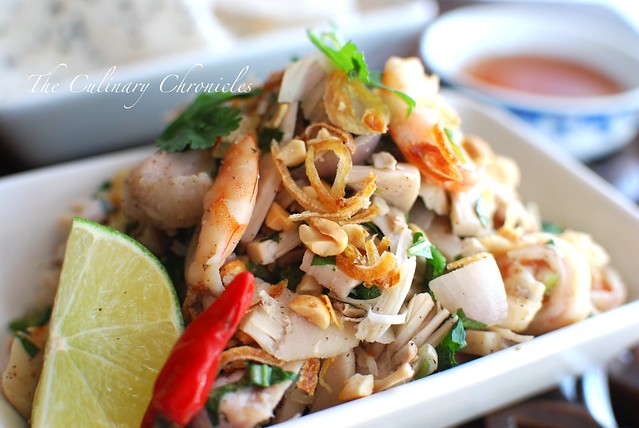
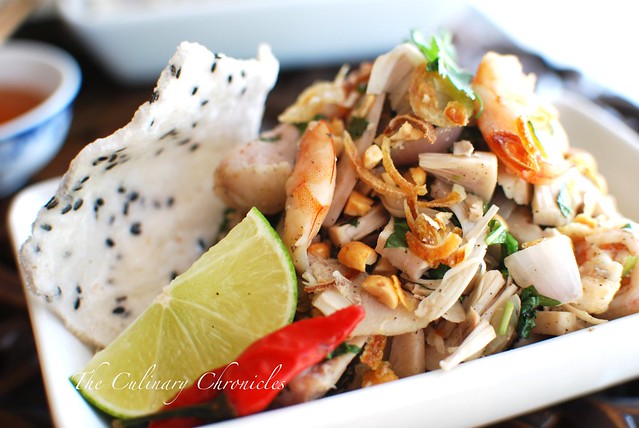
Gỏi Mít Trộn (Vietnamese Young Jackfruit Salad)

When our clan gathers, you can be sure that there will be a massive array of delicious food. One can always count on the usual favorites such as Bánh Ít (sticky rice dumplings), Bún Bò Huế (spicy beef noodle soup),and Cua Rang Mui (salt roasted crab). And intermixed with all the Vietnamese goodies would often be a sprinkling of “American” dishes such as mom’s Turkey.

Growing up, each dish became linked to one of the aunties or Mom as they each refined the recipes to make it their own. But as my generation grew older, the proverbial baton was passed and we in turn began to make these iconic family favorites.

And I find comfort in knowing that these dishes that my siblings, cousins, and I create will pass on my family’s traditions through food.  It’s kind of remarkable to think that the Phở Gà I’ll make for my kids will be exactly the same recipe my mom would have made for them.

Incredible, really.

One dish that I hope to continue is Gỏi Mít Trộn. At the heart of the salad is Mít Non—young, unripe jackfruit. The flesh of the young jackfruit is tender and mild in flavor. In the states, Mít Non is sold both canned and frozen. However, if you use the frozen type, you’ll need to boil it for a bit.

Gỏi Mít Trộn (Vietnamese Young Jackfruit Salad)

After being washed and well drained, the Mít is stir fried for a few moments before it’s tossed with shrimp, pork and several herbs like Rau Răm (Vietnamese Cilantro).

Gỏi Mít Trộn (Vietnamese Young Jackfruit Salad)

The Gỏi Mít Trộn is then topped with fried shallots, crushed peanuts and accompanied with nước chm (dipping sauce).

Gỏi Mít Trộn (Vietnamese Young Jackfruit Salad)

It’s best served with Bánh Đa (also sold as Bánh Tráng Mè) – crispy rice crackers flecked with black sesame seeds. Want to know something funny? When I was little, I used to think that the black sesame seeds in these were ants and stayed clear of these crackers for many years 🙂

 Bánh Đa


I like to eat Gỏi Mít Trộn by drizzling nước chm with lots of chili on top of the salad with a healthy squeeze of fresh lime juice. Then I take a piece of the Bánh Đa and use it to scoop up the goodness. YUM!


Gỏi Mít Trộn (Vietnamese Young Jackfruit Salad)

The layers of flavor and textures in this Gỏi really rock it out. Extremely savory from the proteins and fish sauce with bright herbaceous notes from the Rau Răm, mint, and cilantro. With each bite you get a lovely crunch from the rice crackers and peanuts that balances so well with the tender Mít.

If done correctly, everything is in perfect harmony.

I doubt my Gỏi Mít Trộn will ever be as good as my mom’s or aunties’. But one thing is for certain— in due time, our kids will be trying their hand at it, too 🙂


______________________________________________

Gỏi Mít Trộn (Vietnamese Young Jackfruit Salad)
Serves 8

Ingredients:

3 Cans (20 ounces each) Young Jackfruit
1 Pound Shrimp, shelled and deveined
1 Pound Pork Loin, thinly sliced
2 Tablespoons Shallots, finely diced
1 Tablespoon Fresh Garlic, finely diced
½ Cup Scallions, chopped
1½ Cups Rau Răm Leaves (Vietnamese Cilantro), roughly chopped
¼ Cup Fresh Cilantro, roughly chopped
¼ Cup Fresh Mint, roughly chopped
N
ước Mm (Fish Sauce)
Ground Black Pepper
Vegetable Oil

Accouterments:
Bánh Đa (rice crackers)
N
ước chm (dipping sauce)
Fried Shallots
Crushed Roasted Peanuts
Lime Wedges
Thai Chilies

In a large bowl, combine shrimp, pork, ½ tablespoon garlic, 1 tablespoon shallots, and a few dashes of fish sauce. Mix and season with black pepper. Allow to marinate for 10 minutes.

Drain the cans of jackfruit. Remove any seeds (including the shell layer surrounding the seeds) and cut off and discard any hard sections. With a sharp knife, thinly slice the jackfruit and transfer to a large bowl that has been filled with cold water. Repeat until all the jackfruit has been cut and rinsed. Using clean dishcloths, gently squeeze out the excess liquid. If too much moisture is left, your salad will be really wet and mushy. Set the jackfruit aside.

In a large skillet, heat 2 tablespoons of vegetable oil over a medium flame. Add pork and shrimp and sauté until cooked, about 4-5 minutes. Remove from the pan and set aside.

Using the same skillet, add another 1 tablespoon of oil over a medium flame. Add the remaining shallots, half the scallions and sauté until softened before adding the rest of the garlic. Stir and sauté for 2 minutes. Add the jackfruit and remaining scallions and sauté for an additional 2-3 minutes before seasoning with a few dashes of fish sauce and black pepper. Remove from heat and mix in the shrimp and pork. Toss in the Rau Răm, mint, and cilantro. Taste and adjust accordingly, keeping in mind that additional Nước chm will be used. Plate the contents to a large dish. Sprinkle the tops with fried shallots and crushed peanuts.

Serve the Gỏi Mít Trộn with Bánh Đa, Nước chm, limes, and chilies. Enjoy!


**This is my submission to Delicious Vietnam #15, a monthly blogging event celebrating Vietnamese cuisine which was started by Anh of A Food Lover’s Journey and Hong & Kim of  Ravenous Couple. For more information, please visit Delicious Vietnam Thanks to Angry Asian Creations for hosting this month!**

Poultry · Salads · Vietnamese

Thịt Gà Bóp Rau Răm (Huế Style Chicken Salad with Vietnamese Cilantro)

Thịt Gà Bóp Rau Răm (Huế Style Chicken Salad with Vietnamese Cilantro)


Growing up, our mom never measured her ingredients out. It was a toss of this, a pinch of that…..taste, adjust, and a few more shakes of whatever just for kicks. And even when she was coerced into documenting her dishes, they were vague amounts such as a “1/2 rice bowl of sugar” and a “handful of garlic”. Everything was “to taste”.

It made it difficult as heck to learn her “recipes” but I soon realized all of our aunties were like that too. And that’s what I’ve come to believe Vietnamese cooking to be. It’s pretty tricky as it’s all “to taste” and highly subjective.

You’ll find this quandary even more prominent in “simple” dishes as one slight off-balanced proportion will throw your taste buds for a spin. Things like nước chấm, soups, and even salads will have you repeatedly tasting and adjusting for the perfect balance.


Thịt Gà Bóp Rau Răm (Huế Style Chicken Salad with Vietnamese Cilantro)


Thịt Gà Bóp Rau Răm, is a perfect example of this challenge and was a staple in our household growing up. Popularized from the Huế region of Viet Nam, shredded poached chicken is tossed in a light vinaigrette and packed FULL of fresh herbs and thinly sliced onions. And although I’ve given some measurements in the recipe below, it really depends on your flavor palette to add as much or as little lemon juice and sugar or salt and pepper. Just keep in mind that it’s also served with the nước chm dipping sauce so you’ll need to adjust accordingly.

With all that said, the rau răm (known as Vietnamese Cilantro or Vietnamese Coriander) is my favorite part of the dish. The uniquely bright and slightly peppery flavor this herb adds is something that is difficult to describe but must be experienced. In fact, I’d say that it’s my favorite herb, closely followed by fresh cilantro and Thai basil. The addition of the shredded red cabbage is my nod to the restaurant, Hue Rendezvous in Westminster, California. They serve their Gà Bóp on top of shredded green cabbage, which I think is such a great addition for the added crunch and texture. This time around, I chose to use red cabbage because it’s a little milder in flavor and because its beautiful color provided such a striking contrast.

Thịt Gà Bóp Rau Răm is best served at room temperature and would be a great addition to any summer picnic or luncheon. I’d even venture to say a light Rau Răm Mojito would be a great cocktail pairing for this dish. And that, my friends, is how I also come up with random cocktails 🙂

________________________________________________________________

Thịt Gà Bóp Rau Răm (Huế Style Chicken Salad with Vietnamese Cilantro)
Serves 6

Ingredients:

1 Whole Chicken, preferably Free-Range
2 Tablespoons Nước Mắm, fish sauce
2 Inches Fresh Ginger
3 Whole Garlic Cloves, lightly crushed
½ Tablespoon Black Pepper Corns
1 Small Sized Red Cabbage, shredded
1 Medium Sized White Onion, sliced paper thin
½ Cup Rice Wine Vinegar
1 Bunch (about 1½ cups) Rau Răm leaves, roughly chopped
¼ Cup Fresh Cilantro, roughly chopped
¼ Cup Fresh Lime Juice
1 Teaspoon Sugar
Optional: Nước chấm, fried shallots, crushed peanuts, and chilies

Thoroughly wash and clean the chicken. I usually lightly scrub several tablespoons of table salt all over the exterior body/interior cavity of the chicken and rub cut lemon wedges over the skin. This acts as a type of “exfoliant” and helps to reduce impurities and grit as the chicken is poaching. Trim any excess fat and skin as well as be sure to remove the bag of giblets and neck. Rinse the chicken well with cool water and pat dry with paper towels. Prick the skin of the chicken all over with the tines of a fork.

Bring a large pot of water to a boil. Add the nước mắm, ginger, garlic cloves, and pepper corns. Gently ease the chicken into the pot and lower the heat to an even simmer. Poach until cooked—about 25-30 minutes. (Skim off any impurities that may form and discard.) Carefully remove the chicken from the pot and cool to room temperature. *At this point, the poaching liquids can be strained and stored to be used as a light chicken broth at another time.

While the chicken is cooling, combine the sliced onions and rice vinegar in a small bowl. Toss to cover thoroughly and allow to sit for about 15 minutes. In another small bowl, dissolve the sugar into the lime juice.

When the chicken is cooled enough to handle, shred all the meat into bite sized pieces discarding the skin, bones, and fatty portions. Toss the shredded chicken with the pickled onions and add in the rau răm and cilantro.  Add the lime juice mixture a little bit at a time to your taste preference. Season with salt and pepper.

To plate, spread the shredded cabbage on a large plate and top with a pile of the  shredded chicken salad. Sprinkle the tops with fried shallots, chilies, crushed peanuts and serve with nước chấm on the side.

*It should be noted that Gà Đi B (free range chicken) is preferred in this dish for its texture and flavor.


**This is my submission to Delicious Vietnam #14, a monthly blogging event celebrating Vietnamese cuisine which was started by Anh of A Food Lover’s Journey and Hong & Kim of  Ravenous Couple. For more information, please visit Delicious Vietnam Thanks to Rau Om for hosting this month!**