Seafood · Vietnamese

Chả Cá Thăng Long (Vietnamese Style Fish with Turmeric & Dill)

Cha Cá Thang Long (Vietnamese Style Fish with Tumeric & Dill)

Chả Cá Thăng Long (also known as Chả Lã Vọng and Chả Cá Hà Nội) is an infamous Hà Nội dish. At it’s originating roots from the 100+ year old Chả Lã Vọng restaurant, turmeric marinaded fish is first grilled and then fried table-side. It’s served with tons of fresh dill, other herbs, crush peanuts, and rice noodles.

It wasn’t until I was in college that I began to truly appreciate this dish with it’s complex, yet well balanced, flavors. In Orange County, I would order it as a treat when I was out with my parents in Little Sài Gòn. The only popular place to get Chả Cá Thăng Long at that time was from Viễn Đông Restaurant where it would come out on sizzling cast iron plates. Now, Chả Cá is pretty readily available at many Vietnamese restaurants.

Cha Cá Thang Long (Vietnamese Style Fish with Tumeric & Dill)

Traditionally, in Hà Nội, this dish is made with cá lóc –or snakehead fish. Which, on a random note, was my dad’s nickname in the navy. 🙂

Here in the states, most restaurants will make it with catfish or other firm white fish. But mom also used to make it with salmon, too.

If you’ve never had Chả Cá before, you may be surprised to see how much fresh dill is used. But trust in the process because it’s the plentiful dill and turmeric that makes this dish so special.

Cha Cá Thang Long (Vietnamese Style Fish with Tumeric & Dill)

Typically, Chả Cá is served with Mắm Nêm—a very pungent, fermented anchovy sauce. I love the stuff but it’s definitely a flavor to get used to—even if you are Vietnamese! As such, you see this dish also served with a standard Nước Chấm which is much more mild compared to its counterpart.

Not up to mixing up a batch of your own Mắm Nêm? No worries, I buy mine premixed and bottled. Mắm Nêm is just one of those tricky things that I seem to never be able to get the right ratios down. 🙂

Cha Cá Thang Long (Vietnamese Style Fish with Tumeric & Dill)

At home, you can cook Chả Cá in several different ways. Either on a grill (or grill pan), underneath the broiler, or simply pan fry like I did. But be sure to get all the crispy brown bits in your bowl because that’s what is packed full of yummy flavor.

Thanks for reading!

Cha Cá Thang Long (Vietnamese Style Fish with Tumeric & Dill)

On a side note, I’d like to dedicate this post/dish to our Mom who instilled in us the love for cooking and sharing food with loved ones. She would have turned 70 this coming Tuesday. Wasn’t she lovely? 🙂

Happy Mother’s Day and Happy Birthday, Mom! We miss you and love you!

______________________________________________________

Chả Cá Thăng Long (Vietnamese Style Fish with Turmeric & Dill)
Serves 4

Ingredients:

For Fish:
1 Pound Firm White Fish, cut into 2 inch pieces
3 Tablespoons Vietnamese Fish Sauce
1 Teaspoon Turmeric Powder
1 Tablespoon Fresh Garlic, finely minced
½ Tablespoon Fresh Ginger, finely grated
2 Tablespoons Shallots, finely diced
1 Tablespoon Fresh Dill Fronds, chopped (for marinade)
¼ Teaspoon Black Pepper
4 Scallions, sliced into 2 inch segments
1 Small White Onion, sliced
1 Large Bunch of Dill, without stems
3 Tablespoons Vegetable Oil, divided

Accouterments:
½ Cup Peanuts, toasted and roughly chopped
Fresh Dill Fronds, chopped
Red Thai Chiles, diced
Chili Paste
Nước Chấm (fish dipping sauce) or Mắm Nêm (fermented anchovy dipping sauce)
1 Package Vermicelli Noodles, boiled according to package directions

In a large bowl, mix fish sauce, turmeric, garlic, ginger, shallots, dill fronds, and black pepper. Add fish and mix well. Cover the bowl with plastic wrap and refrigerate for 1-2 hours.

In a large skillet, heat 1 tablespoon of oil. Cook the white onions until lightly golden. Add 1/3 of the dill and ½ of the sliced scallions. Sauté for an additional 1-2 minutes. Plate the onions, scallions and dill on a serving platter.

Remove fish the refrigerator and drain off the marinade. Using paper towels, pat off any excess liquids. Using the same skillet, heat the remaining oil to medium high. Pan fry the fish—about 3-4 minutes on each side until the fish is evenly browned. Plate the fish on top of the bed of cooked onions, scallions and dill. Immediately top with the remaining fresh dill and scallions. Sprinkle peanuts on top and serve immediately with vermicelli noodles and sauces.


**This is my submission to Delicious Vietnam #13, a monthly blogging event celebrating Vietnamese cuisine which was started by Anh of A Food Lover’s Journey and Hong & Kim of  Ravenous Couple. For more information, please visit Delicious Vietnam**

Drinks · Ice Cream · Vietnamese

Sinh Tố Cà Phê (Vietnamese Coffee Shake)

Sinh Tố Cà Phê (Vietnamese Coffee Shake)


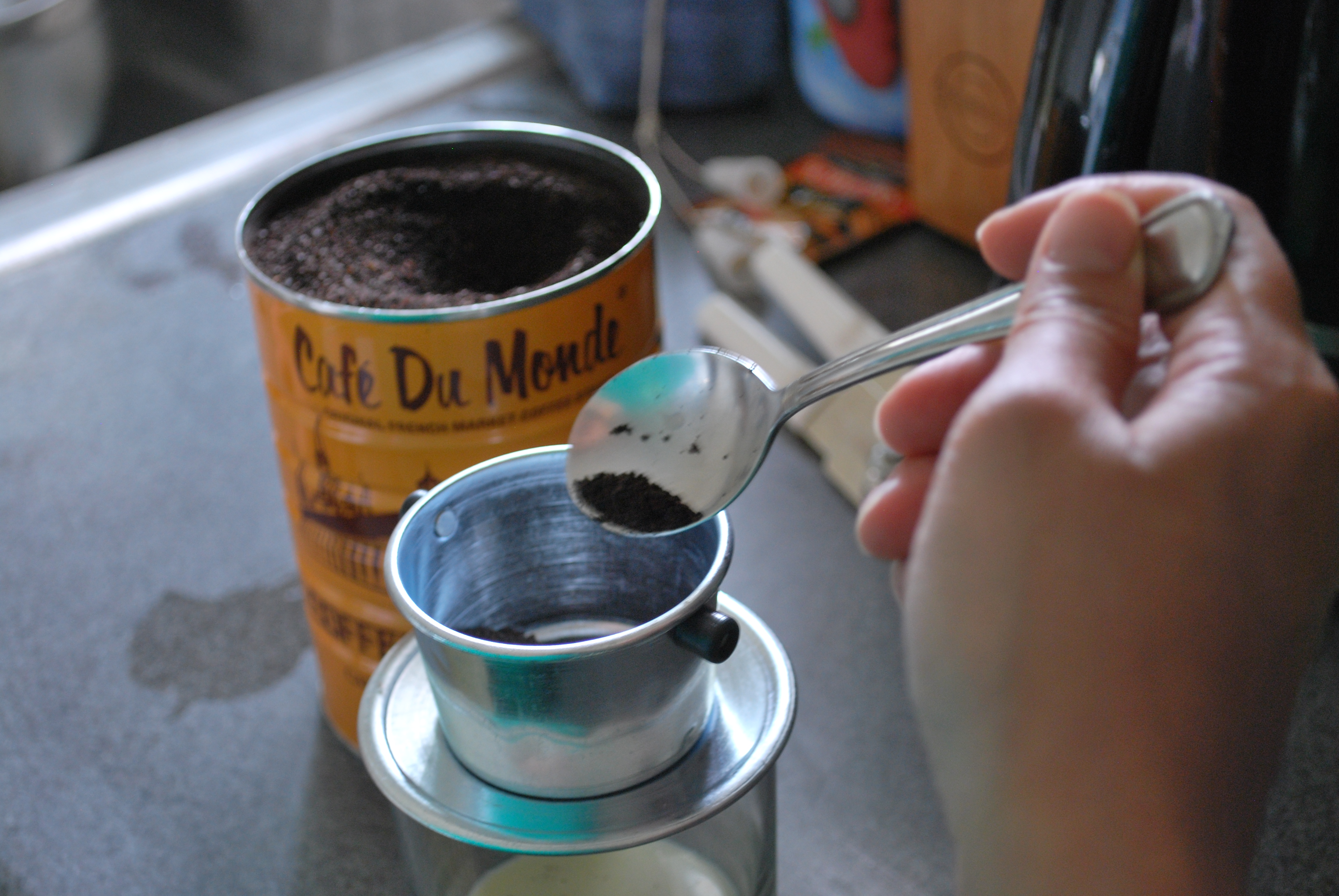
Vietnamese Coffee is a rich, dark roast that is slowly dripped through a small metal filter. More often than not, the coffee grinds are mixed with a chicory blend that gives the coffee a “woody” flavor profile. With a spoonful of rich condensed milk, it’s called Cà Phê Sữa and without it’s called Cà Phê Đen.

For this month’s Delicious Vietnam, I decided to utilize Cà Phê Sữa to make one of my favorite treats — Sinh Tố or Vietnamese Shake. In Việt Nam, Sinh Tố is usually made with fruits such as pineapples, mangoes, and avocados. It’s blended with milk, condensed milk, and ice to make a deliciously refreshing treat. But since I’m a major caffeine addict, I thought a Cà Phê flavored Sinh Tố would be the best of both worlds.

Instead of milk, I opted for Vanilla Ice Cream. And with the use of slow dripped Vietnamese coffee, this “shake” has a completely different flavor than any coffee shake you’ve ever tasted. It’s all in the chicory!

Don’t be surprised if your nearest mega-coffee-shop started offering Sinh Tố Cà Phê!

________________________________________

Sinh Tố Cà Phê (Vietnamese Coffee Shake)

Ingredients:

5 Ounces Freshly Brewed Vietnamese Coffee
2 Heaping Scoops Vanilla Ice Cream
1/2 Cup Crushed Ice
1 Tablespoon Condensed Milk

While the Vietnamese Coffee is slightly warm, stir in the condensed milk until it’s combined. Allow the coffee to cool to room temperature. Once cooled, pour coffee mixture into a blender and add ice cream and crushed ice. Pulse/blend the contents until smooth.

**This is my submission to Delicious Vietnam #12, a monthly blogging event celebrating Vietnamese cuisine which was started by Anh of A Food Lover’s Journey and Hong & Kim of  Ravenous Couple. For more information, please visit Delicious Vietnam**

 

Vietnamese

Delicious Vietnam #11 Roundup!


It’s been my absolute pleasure to host this month’s Delicious Vietnam which was founded by Anh of A Food Lover’s Journey and Kim and Hong of Ravenous Couple. I am thankful to have met new bloggers through this process and I am greatly excited to see a thriving love and passion for Vietnamese cuisine!

This month features mouth-watering dishes that vary from Savory to Sweet delights. Get those tummies ready because here we go!


Savory Fare:


From Hanoi, Vietnam: Chi Anh Dao of Door To My Kitchen shares Vietnamese Pan-Fried Tofu Chi Anh Dao says:

“The best way to eat Fried Tofu is fresh out of the pan – golden, crispy and bubbling hot, dipped into Vietnamese fish sauce with chopped scallions. I could eat it just like that with white rice, without anything else.”

Her amazingly descriptive post of the sounds, smells, and memories connected to this traditional dish will make you run to your kitchens to fry plates of tofu!


From Mountain View, CA and Ann Arbor, MI.: The dynamic team of Rau Om shares Caterpillar Bánh Tét (Bánh Tét Sâu Bướm). They say:

“Working from a caterpillar photo, we knew we needed 3 colors: green, orange and black. Green and orange colors were easy: pandan leaf extract and gấc (spiny bitter gourd) are 2 common Vietnamese natural coloring ingredients. Black was a bit more challenging. We gravitated toward squid ink to color the sticky rice black, but we were worried about introducing a seafood taste to our bánh tét. Our other option we decided on was nếp than (black glutinous rice).”

This whimsical and creative approach to Bánh Tét would be a great way to celebrate the New Year!


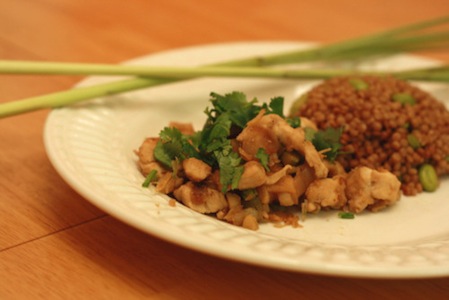
From San Jose, CA: Pauline of Sassy Savvy Travel shares Mom’s Lemongrass Chicken (Gà Xào Xả). Pauline says:

“The perfume of lemongrass sauteed with garlic and onions always made my mouth water.  My mom also knew how much I loved the crisp on the slightly seared chicken.  It was simple for her to cook, it made the house smell wonderful, and it tasted lovingly homemade.”

Definitely mouth watering! I can already smell the delicious aromas of the lemongrass!


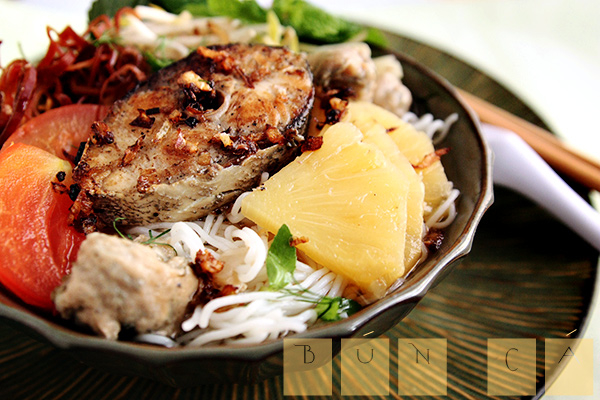
From Los Angeles, CA: Hong and Kim of Ravenous Couple shares Vermicelli Fish Soup (Bún Cá). They say:

“It’s a simple vermicelli noodle soup often with a large steak or filet of meaty white fish as well as fish paste meatballs.  The broth is pork or chicken stock sweetened with pineapple and tomatoes.”

This colorful dish epitomizes the flavors of savory, sour, sweet—I can’t wait to give it a try!


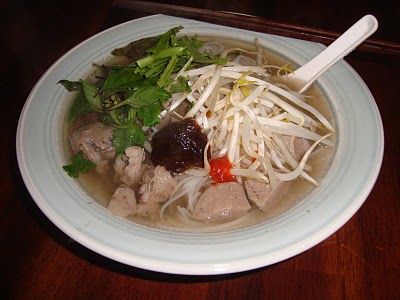
From Virginia: Julie of Beginner Mom on the Run shares Beef Phở. Julie says:

“It’s steaming hot and like a aromatic facial when you lean over for the first bite. It’s ideal for any time during the day or night. It will keep your belly full for hours and is light and energizing from the assortment of fresh herbs you personalize you bowl with: basil, bean sprouts, cilantro, culantro, and green onions.”

I love that Julie chars her yellow onions and ginger to bring out an additional layer of flavors!


From San Diego, CA: Yours Truly of The Culinary Chronicles shares Vietnamese Chicken Glass Noodle Soup (Miến Gà).

“The key to my Miến Gà is homemade chicken stock—something I almost always have on hand.  That combined with a splash of what I call “Vietnamese Liquid Gold” and you will have a wonderful and clean broth for your Miến Gà.”

Whether you’re feeling under the weather or just need the warmth of comfort food, Miến Gà will be perfect for you!


Sweet Fare:


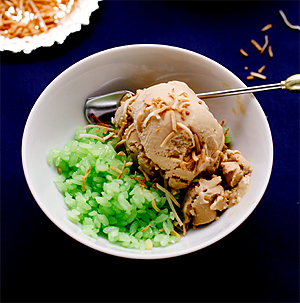
From Melbourne, Australia: Anh of A Food Lover’s Journey shares Coconut Ice Cream with Pandan Sticky Rice (Kem Xôi). Anh says:

“My favourite bit of kem xôi was the toasted coconut pieces, which have wonderful nutty and coconut flavor and aroma. I always believe that such addition was the key to make kem xôi special. It was the link to bind the ice-cream together with the sticky rice component of the dish. (And, who can disagree that pandan and coconut are borne for each other?)

Coconut AND Pandan? Now that’s a winning pair and I just love the various textures that this tempting dessert offers!


From Berkeley, CA: Mai of Flavor Boulevard discusses White Canarium or Chinese Olive (Candied Cà-Na). Mai says:

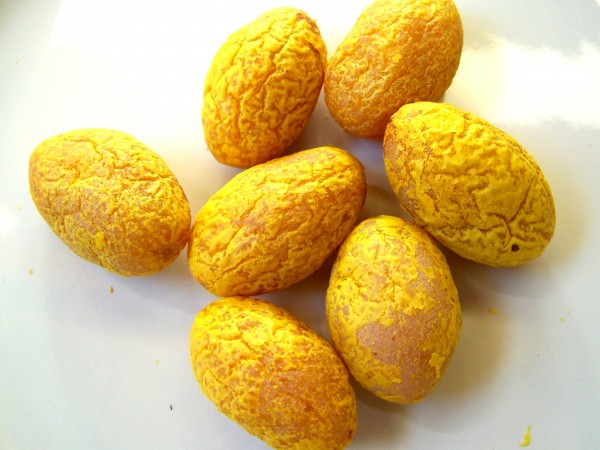
“The first nibble must be executed with caution. It’s firm and sound, with one big hard seed. No wonder the folks at home call the American football the cà na ball: they look and feel the same, only smaller. The flesh is dense like an old coconut’s meat, sour like lemon leaves, yes sweet like licorice blended with a dash of sea salt.”

According to Mai’s post, Cà Na also has some medicinal properties. Tasty and good for you!


From Texas: We welcome Mai’s mother of Flavor Boulevard who shares Candied Orange Peel with Pulp (Mứt Cam). She says:

“This candied orange can also be eaten with toast like marmalade, its sweetness stark, its texture crunchy, a natural minty sweep from the peel even gives it a healthy sense. They say eating it helps improving sore throats. I think making it helps improving patience.”

This Candied Orange Peel seems so inviting that I can almost smell the floral fragrance coming from my screen!


From Ashburn, VA: Rosa of saVUry and sweet shares Bánh Tiêu À la Mode. Rosa says:

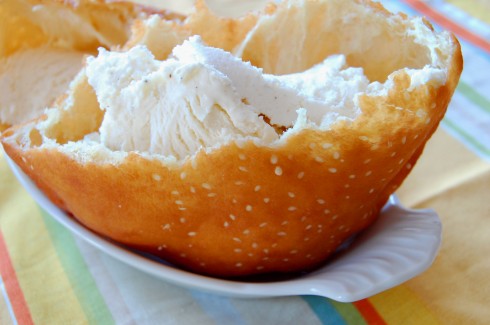
“I gently tore the bánh tiêu in half and stuffed it with ice cream.  IT WAS GOOD.  Fried doughy goodness with cool creamy ice cream.  It doesn’t have to stop there, coconut ice cream with coconut shavings? Nutella? Durian (if you’re into that, not I)?  But for today the vanilla ice cream just hit the spot.  Another beautiful harmony of Vietnamese and western cuisine has been born.”

Fried goodness combined with a creamy, cold treat? Now THAT is a beautiful combination!


Thank You to everyone who contributed to this month’s delicious spread! I am thrilled by all of this diversity in Vietnamese cuisine and hope that this month’s Delicious Vietnam has inspired you to try out some of these dishes either in your own kitchens or from your local Vietnamese restaurants. 🙂 Cheers and Happy Eating!

Want to join this wonderful event? Come on board! Anh of A Food Lover’s Journey will be hosting for April. Submissions are due April 10th and should be sent to anhnguyen118@gmail.com For more information on hosting or past events, please visit Delicious Vietnam.

Pastas/Noodles · Poultry · Soups/Stews · Vietnamese

Miến Gà (Vietnamese Chicken Glass Noodle Soup)

Miến Gà (Vietnamese Chicken Glass Noodle Soup)


Chicken Noodle Soup…..what could be more comforting?

Cultures all around the world have their own spin on this soul warming dish. For the Vietnamese, we have at least two versions— Phở Gà and Miến Gà.

Phở Gà is the lighter alternative to the traditional beef Phở and follows a similar cooking method. Due to the slow simmering process of the broth and spices, it takes me a couple of hours to complete a quality Phở Gà. Miến Gà offers a lighter broth and is served with glass noodles (Miến). White on Rice Couple gives a great overview of Miến.


Miến Gà (Vietnamese Chicken Glass Noodle Soup)


Both soups are delicious–especially on cold days. However, I find myself making Miến Gà more often. My version of Miến Gà can be done in a quick 20 minutes. In addition, you can tailor the ingredient amounts to make anywhere from 1 to 8+ bowls. Whereas with Phở Gà, you need a couple hours (at least) and are committed to a huge pot of it!


Miến Gà (Vietnamese Chicken Glass Noodle Soup)
The key to my Miến Gà is homemade chicken stock—something I almost always have on hand.  That combined with a splash of what I call “Vietnamese Liquid Gold” and you will have a wonderful and clean broth for your Miến Gà.

Wondering what Vietnamese Liquid Gold is? Nước Mắm (fish sauce), OF COURSE! 🙂


Miến Gà (Vietnamese Chicken Glass Noodle Soup)


Serve your Miến Gà with fresh herbs (cilantro, Thai Basil), a few slices of red chilies, and a squeeze of lime. The herbs, spice, and the tiny bit of citrus perfectly rounds out the flavors. This type of balance is the quintessential foundation in Vietnamese cuisine.

Miến Gà— now that is comfort food 🙂

_____________________________________________

Miến Gà (Vietnamese Chicken Glass Noodle Soup)
Serves 2

Ingredients:

1.5 Quarts Homemade Chicken Stock
2 Tablespoons Nước Mắm (fish sauce)
1 Inch Fresh Ginger, peeled
1 Teaspoon Black Peppercorns
1 Boneless Chicken Breast
4 Ounces Dried Miến (glass noodles)
Hot Water
Garnish: Chopped Scallions, Chopped Cilantro, Thai Basil, Slices of Red Chilies, Lime Wedges

Fill a large bowl with hot water and add Miến. Soak Miến for at least 15 minutes until they have softened.

In a medium size pot, add chicken stock, Nước Mắm, peppercorns and ginger. Bring to a simmer and add chicken breast. Continue poaching chicken breast until it is fully cooked, about 8 minutes–depending on size. Remove the chicken breast. Once it’s cooled slightly, slice or shred the meat.

Turning back to the the broth, skim off any impurities that may have formed. Taste and adjust the seasonings—adding more pepper or a dash of Nước Mắm as needed. Keep the broth at a low simmer to ensure it stays hot.

Drain the Miến and add to bowls. Sprinkle with scallions, cilantro, and arrange chicken slices on top. Ladle hot broth over and noodles. Garnish with additional scallions, chilies, basil, and lime.

Note: It’s important that the broth remain piping hot when it’s poured over the noodles. The heat will finish cooking the Miến.


**This is my submission to Delicious Vietnam, a monthly blogging event celebrating Vietnamese cuisine which was started by Anh of A Food Lover’s Journey and Hong & Kim of  Ravenous Couple. To participate,  please send entries to theculinarychronicles@gmail.com by March 13th! For more information, please visit Delicious Vietnam**


Reviews · Vietnamese

Bánh Cuốn (Vietnamese Steamed Rice Flour Crepes)

Bánh Cuốn Đặc Biệt


When you’re a kid, you never realize how good you have it. I sure as heck didn’t.

Growing up in the mid-West, my mom somehow pulled together “Western” items with whatever “Asian ingredients” she could find to create delicious Vietnamese specialties. When necessity meets ingenuity…..it’s just what she did.

So when I look back and think how she was able to make Bánh Cuốn in our kitchen in Minnesota, I am pretty darn dumbfounded. It definitely makes me think twice next time I curse the fact that I only have course kosher salt on hand and not fine kosher salt.  🙂


Bánh Cuốn Đặc Biệt


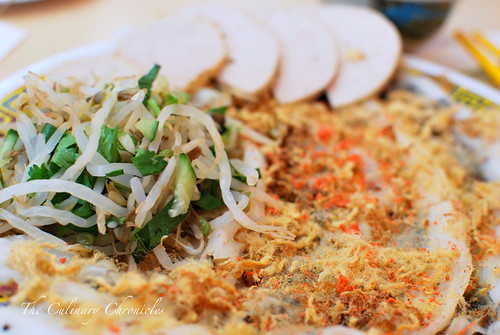
If you’ve never had them before, Bánh Cuốn is a dish originating from northern Việt Nam. Essentially, they are steamed “crepes” made from rice flour and are filled with a savory ground pork and wood ear mushroom mixture. You can also find them with finely minced dried prawns or without any filling at all–though the latter is technically called bánh ướt. Bánh Cuốn are typically served with chả lụa (Vietnamese “ham”), bean sprouts, cucumbers, fried shallots, fresh herbs and nước chấm (dipping sauce).

You can judge the quality of Bánh Cuốn by how thin the “crepes” are. They should be extremely thin—practically see through. For all you bread makers out there, think of “window pane” thin.

One of the reasons why I love Bánh Cuốn so much is that I believe it truly exemplifies what makes Vietnamese cuisine so darn delicious. It’s a wonderful interplay between texture (soft crepes to the crispiness of the shallots and veggies), bright herbaceous notes from the mint and herbs, and complimentary sweet-salty-spicy tones from the nước chấm.

YUM. My mouth is watering just thinking of it!

And in this gal’s opinion, the BEST place to get Bánh Cuốn outside of Việt Nam is in Santa Ana, California from Phở Tàu Bay L.T.T.


Phở Tàu Bay L.T.T. (Santa Ana, CA)


I know what you’re thinking. The BEST place to get Bánh Cuốn is from a Phở place?! And I unequivocal say—HECK YES!

My mom first took us to Phở Tàu Bay L.T.T. years ago and since then, I cannot eat Bánh Cuốn anywhere else. Many restaurants these days purchase their Bánh Cuốn already made—or they make them in advance. BOO on that! But Phở Tàu Bay L.T.T. pours/steams them to order. Sure, it makes your wait a little longer (especially since they’re usually PACKED) but trust me….it is so worth it.

A little while ago, we were at lunch with my sister and nieces at Phở Tàu Bay L.T.T. when I  whipped out my camera to snap pictures of my beautiful plate of Bánh Cuốn Đặc Biệt – the house specialty. The next thing I knew it, my sister had convinced the staff to let me into their back kitchen to take photos of them making them! I grabbed my camera and rushed back with my sister before they had the chance to change their minds.

I slowly entered the small kitchen with utter eagerness and glee. The first thing I saw was a woman hand peeling buckets and buckets of fresh shallots to be fried. And there were a TON of shallots! No jarred stuff here–no wonder why it’s so good! I gave a silent “Thank Buddha!” for this woman because without those shallots, their Bánh Cuốn would be naked.

The Bánh Cuốn station was staffed by two aunties who moved quick as lighting! As a result, a lot of my photos were blurry because I could barely keep up with them. And let’s be honest, I was in no position to say “can you do that again??” Just more incentive to learn how to take better photos 🙂


Phở Tàu Bay L.T.T. (Santa Ana, CA)


On the top left you’ll see the steamer that is outfitted with an extremely fine mesh. This is the most important “tool” in creating Bánh Cuốn. An extremely thin layer of rice flour batter is poured and spread on top of the mesh (top right). Seconds later (bottom left), the auntie used a wooden stick to peel off the “crepe” and places it on the rolling station (bottom right).


Phở Tàu Bay L.T.T. (Santa Ana, CA)


The auntie then quickly fills the Bánh Cuốn with the pork/wood ear mushroom mixture (top right) and then delicately rolls them up. She literally had an entire plate done within two or three minutes!  Who knows….it may be her Super Hero power.


Bánh Cuốn Đặc Biệt


VOILA! A beautiful plate of Bánh Cuốn Đặc Biệt. And this plate will only set you back 6 Bucks! Worth every penny!


Bánh Cuốn Đặc Biệt


To enjoy the dish, take a little bit of everything into a small bowl. Make sure to get some veggies/herbs, fried shallots, and Thịt Chà Bông (“cotton meat”—it tastes so much better than it sounds!) along with the Bánh Cuốn.  Pour some nước chấm and ớt (chili) over it and chow down!


Soda Chanh


My beverage of choice when I inhale (and I mean INHALE) a plate of Bánh Cuốn is a tall glass of Soda Chanh— a sugary, carbonated, limeade. MMM…so refreshing! Watch out for an upcoming post on my “adult” version of a Soda Chanh 🙂

And in case you missed it or your mouth isn’t watering enough yet, here’s another pic to get your tummy growling. 🙂


Bánh Cuốn Đặc Biệt


So the next time you’re in Orange County and are looking for some authentic and delicious Vietnamese cuisine—you MUST stop by Phở Tàu Bay L.T.T. to grab yourself a few plates of Bánh Cuốn. Heck—don’t wait, DRIVE there! You will not regret it. And in case you’re wondering, their Phở is darn tasty, too.

UGH….now I need to go and get me some! 🙂

A HUGE Cảm ơn to the staff of Phở Tàu Bay L.T.T. for allowing me to see “where the magic happens“. And truly, their Bánh Cuốn is a magical thing.


Phở Tàu Bay L.T.T.
3610 West 1st Street
Santa Ana, CA 92703
(714) 531-6634
Tue-Sat 8 am – 8 pm, Sun 8 am – 4 pm (Closed on Mondays)


**This is my entry to Delicious Vietnam, which was started by Anh of A Food Lover’s Journey and Hong & Kim of  Ravenous Couple. Much thanks to Mai of Flavor Boulevard for hosting this month!**


Desserts/Pastries · Vietnamese

Celebrating Tết with Mứt Gừng (Vietnamese Candied Ginger)

Mứt Gừng (Vietnamese Candied Ginger)


Chúc Mừng Năm Mới!!

That’s right, it’s Tết–the Vietnamese Lunar New Year! For Vietnamese folks, we are welcoming in the Year of the Cat. For our Chinese neighbors, it’s the Year of the Rabbit. 🙂

There are so many customs and traditions that go along with Tết–from making sure your house/home is clean, offering ancestral prayers and thanks, eating delicious food, playing games like bầu cua cá cọp, going to festivals and my personal favorite—getting lì xì (red envelopes of money to bring luck and good fortune).

Tết is a multiple day celebration—which means food galore! Bánh chưng (sticky rice cakes filled with meats, mung beans, etc.), Xôi (savory or sweet glutinous rice), Măng khô (braised bamboo shoots), and all sorts of Mứt (preserved/candied vegetables and fruits).

And although the trays of Mứt always had a wide variety of fruits, veggies, & nuts to choose from (coconut, lotus seeds, persimmons, mandarins, etc.), my favorite was Mứt Gừng —candied or crystallized ginger which my grandmother made all of the time.


Mứt Gừng (Vietnamese Candied Ginger)


The thin slices of candied ginger are not only yummy but they can be used for health ailments too. Nausea or motion sickness can often be curtailed by chewing/sucking on Mứt Gừng and next time you have a cough, forgo the drops and grab a bag of Mứt Gừng instead. You can also filter the boiling water used to cook the ginger into a calming ginger tea. All natural! And as for baking, I’ve also used this Candied Ginger in my Scones and to top Spiced Cupcakes. So many options!

I want to give a big THANKS to my cousin An for giving me a tutorial on Mứt Gừng—the woman even took step by step pics on her phone for me. Now that’s a trooper—-although I’m not sure how she’ll feel about me adding the lemon zest. 🙂

So allow me to wish you all an extremely happy, prosperous, and healthy New Year!

Chúc Mừng Năm Mới!!

————————————————————–

Mứt Gừng (Vietnamese Candied Ginger)
Makes approximately one pound

Ingredients:

1 Pound Fresh Ginger
2 Cups Granulated Sugar
1/2 Cup Fresh Lemon Juice, divided
1 Teaspoon Fresh Lemon Zest
1 Teaspoon Vanilla Extract

Fill a large bowl with cold water and add 1/4 cup of lemon juice. Peel the ginger, removing any blemishes from the root and then place in the bowl of water until all pieces have been peeled. Using a mandoline with its thinnest plate, slice the ginger roots. Place the ginger slices in the bowl of water until all have been cut.

Fill a large pot with water and the rest of the lemon juice. Transfer the ginger slices to the pot and bring to a boil. While the ginger is boiling, spray two cooling racks with nonstick spray and place them on cookie sheets that have been lined with foil. Cook the ginger for 25 minutes, skimming off any impurities that may build up. Drain the slices in a colander and flush with cool tap water. Rinse the ginger 2 or 3 times and shake off excess water. Use paper towels to dry the ginger slices off well.

In a large pan over medium-low heat, add the ginger slices with sugar. Use chopsticks to coat the slices with sugar. Continue to stir as the sugar begins to melt and bubble. Stir in the vanilla extract and lemon zest. Continue cooking and stirring the ginger until the liquid has evaporated and the sugar has crystallized onto the slices. This process takes about 15-20 minutes.

Remove from heat and transfer the slices to the cooling racks. Be sure to spread the slices into one even layer—flatten out any slices that may have folded over or curled up. Allow an hour for the slices to completely dry. Store in Ziploc bags or other airtight containers.

Beef · Vietnamese

Thịt Bò Xào Khoai Tây (Vietnamese Stir Fry Beef and Potatoes)

Thịt Bò Xào Khoai Tây (Vietnamese Stir Fry Beef and Potatoes)

Growing up, our normal dinners would include several family-style dishes to be eaten with rice (cơm). We always had some type of soup (canh), vegetable dish, and a protein dish. This is what standard Vietnamese meals were for us and were referred to as “ăn cơm” or “to eat rice”.

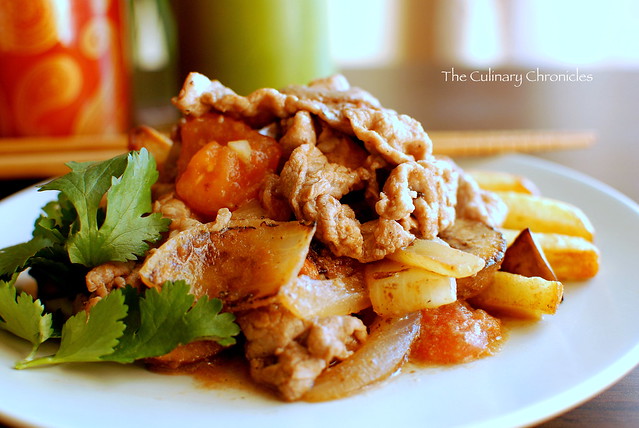
Of course there were dishes that my siblings and I all dreaded…..Canh mướp đắng (Bittermelon Soup) being one of them. But then there were some that were general favorites……Mực nhồi (Stuffed squid), Tôm lăn bột (Battered fried shrimp), and of course Thịt Bò Xào Khoai Tây (Stir Fry Beef and Potatoes). In fact, the latter was my personal favorite.

What I loved most about this dish was the “gravy” that it produced…..which is ironic because it’s the gravy-like sauces of many Chinese dishes that turn me off from that cuisine! But somehow, this beef gravy was liquid gold as a kid and when you mixed it up with your rice–delish! In fact, I would always request that my mom make sure that the dish had lots of “gravy”.

The key to making a killer Thịt Bò Xào is a high quality beef—ribeye or filet mignon was my mom’s personal choice. Since the meat needs to be cut so thin and cooked quickly at high heat, other cuts aren’t as successful. It may seem a tad pricey for a beef stir fry but when you take into account how many people this dish will feed, it’s well worth the extra few dollars. And when you bite into the meat, you’ll be pretty darn happy with the tenderness of it. As for the added bit of cornstarch and butter at the end (optional), it will assist in making the coveted gravy.

And when that gravy is soaked up into the potatoes—SOOO GOOD! It won’t be long before Thịt Bò Xào Khoai Tây is your favorite dish when you “ăn cơm”.

Tip: My local Vietnamese grocery store sells ribeye packages that are already thinly sliced. But if your store doesn’t or you can’t convince your butcher to slice it for you, pop your beef into the freezer for a few minutes before you start slicing it. Slightly chilled meat is a lot easier to make thin slices out of—just be sure to use a super sharp knife.

——————————————————————————————–

Thịt Bò Xào Khoai Tây (Vietnamese Stir Fry Beef and Potatoes)
Serves approximately 6-8

Ingredients:

1 Pound Thinly Sliced Ribeye Beef
1 Small Yellow Onion, quartered
1 Large Tomato, sliced into wedges
1½ Cups Mushrooms, roughly chopped
1 Tablespoon Fresh Garlic, finely minced
1½  Teaspoons Cornstarch
3 Tablespoons Vegetable Oil, plus additional to fry potatoes
2-3 Tablespoons Maggi or Soy Sauce
Fresh Cracked Pepper
2 Large Russet Potato, peeled and cut into ¼ inch wide strips
1 Tablespoon Unsalted Butter, optional

In a bowl, mix together beef, garlic, cornstarch, and 1 tablespoon of vegetable oil. Season with freshly cracked pepper and set aside.

Heat 2 inches of oil in a heavy pot until it reaches 375 degrees. Carefully add a handful of the potatoes into the pot stirring occasionally, until they are golden brown–about 7 to 8 minutes. Drain the potatoes on paper towels and keep warm on a baking sheet in a 200 degree oven while frying remaining batches.  *If you prefer to bake your potatoes, toss the potatoes strips in 2 tablespoons of vegetable oil. Spread them in one even layer on a baking sheet and place in a 450 degree oven for 40-45 minutes. Stir every 10-15 minutes to ensure all sides are baked even.

Heat 2 tablespoons of vegetable oil in a large wok over medium heat. Add onions and mushrooms and cook until both have softened but not browned, approximately 4-5 minutes. Add tomatoes and cook for an additional 2 minutes. Push the items to the side of your wok (or remove to a plate if your wok is not large enough) and add the beef. Quickly stir fry the beef for 1-2 minutes or until lightly brown—this should not take a long time since the beef is so thin.  Stir in the onion/tomato/mushroom mixture and combine well. Add the butter (optional) and remove from heat. Stir in Maggi  (to taste) and additional cracked black pepper.

To serve, place potatoes in a layer on a plate. Pour beef stir fry over the top and garnish with additional cilantro.

Pastas/Noodles · Seafood · Side Dish · Vietnamese

Roasted Garlic Dungeness Crab with Garlic Noodles


Roasted Garlic Crab with Garlic Noodles

Well over 15 years ago when I was still living in LA, my family and I took a trip to San Francisco to visit my sister. Somehow or another we ended up at Thanh Long to try their infamous Roasted Garlic Crab…..and that was it for me. I was in “garlicky-finger licking-good” love.

I am fully aware that I’m not the only one. With throngs of followers, Thanh Long and their other Crustacean locations have been wooing people for over 3 decades with their roasted garlic crab, prawns, garlic noodles and even their shaking beef. Top that off with the knowledge of their “secret kitchen” (an enclosed area within the main kitchen that is off limits to all employees except An Family members) and who can resist?

But here’s the thing. A dinner for two will easily set you back 100 bucks–and that’s playing it minimal. And with the tough economy and this gal’s expensive food habits, I had to take matters into my own hands. Yes….I’m talking about a Roasted Garlic Dungeness Crab knock-off was in order…..fully equipped with Garlic Noodles. The method below is an adaptation of how my family prepares Cua Rang Me (Crab with Tamarind Sauce). However, with that particular preparation, I like to take the tamales from the crab and incorporate it into the sauce. So good.

Sure, I am well aware that I may be totally off base with this Garlic Crab –probably missing several key ingredients from the original. But since the chances of me getting into the An Family Secret Kitchen are slim to none—this will have to do. And “do”, it sure did! Utterly garlicky, buttery, decadent and fairly easy too. And at a fraction of the cost (dinner for two was way under $20), our bellies were completely happy with moola still left in our pockets.

And that dear friends, is a “Nguyen-Win Situation“.

ENJOY!

Garlic Noodles

Ok–you caught me. I also made GINORMOUS Roasted Garlic Prawns, too.

__________________________________________________

Roasted Garlic Dungeness Crab with Garlic Noodles

Ingredients:

Roasted Garlic Dungeness Crab (Serves 2)
¼ Cup Fresh Garlic, minced
3 Tablespoons Shallots, minced
1 Tablespoon Light Brown Sugar
1 Teaspoon Red Chili Flakes
1 Tablespoon Fish Sauce
½ Tablespoon Cracked Black Pepper
8 Tablespoons Unsalted Butter
1 Tablespoon Olive Oil
1 Fresh Dungeness Crab, about 2-3 pounds
Lemon Wedges and Chopped Scallions, optional

Garlic Noodles (Serves 6)
1 Pound Chow Mein Noodles*
2 Tablespoons Fresh Garlic, minced
2 Tablespoons Olive Oil
4 Tablespoons Unsalted Butter
1-2 Tablespoons Maggi Seasoning*
½ Tablespoon Light Brown Sugar
1/3 Cup Grated Parmesan Cheese

Crab: Carefully clean the live Dungeness Crab. Drop into a large pot of salted boiling water. Par cook for 5-6 minutes. Remove from the pot and let cool. Once the crab has cooled enough to handle, remove the top shell and quarter the body. Using a kitchen mallet, crack the legs and claws but do not remove the meat.

In a dutch oven, heat up the butter and olive oil. Once the butter has almost melted, add the garlic and shallots. Lightly sauté for 1-2 minutes. Add sugar, chili flakes, fish sauce, and black pepper and cook for an additional minutes. Add the crab to the pot and stir well so that the crab is fully covered with the mixture. Cook on medium heat for an additional 2 minutes. Shake the pot to even the crab into one layer and place in the oven on 375 degrees for 8-10 minutes or until crab is completely cooked. Be careful not to overcook or the crab meat will be very dry. Transfer to serving platter. Sprinkle scallions on top of the crab.

Noodles: Cook the noodles according to the direction on the package. Drain the noodles, reserving a few tablespoons of the starchy water. In a large sauté pan, melt the butter and olive oil. Add the garlic and sauté until aromatic but not browned, approximately 2-3 minutes. Add the sugar and Maggi. Stir until the sugar is dissolved. Remove the pan from the heat and quickly toss the noodles into the mixture. Add the cheese and toss the noodles ensuring that it is thoroughly covered. You may add a tablespoon of the pasta water as needed to loosen the pasta.

The noodles can be boiled before preparing the crab. However, I highly suggest waiting until the crab is roasting in the oven before staring the final steps of the garlic noodles.

Serve both the Garlic Noodles and Crab warm with lemon wedges.

*This recipe has been edited since its initial post. I now use chow mein noodles but in a pinch, you could substitute with spaghetti or linguine noodles.

**You will find that I use a lot of Maggi Seasoning in my recipes. Growing up, my family used it in lieu of traditional Soy Sauce. In fact, we grew up calling Maggi “Xì dầu” (soy sauce), although it technically is not and has a unique flavor of its own. If you don’t have Maggi on hand–run out and buy some! 🙂 But in the mean time, you can substitute with a light soy sauce–though I must reiterate that the flavor will not be the same.

Pastas/Noodles · Pork · Vietnamese

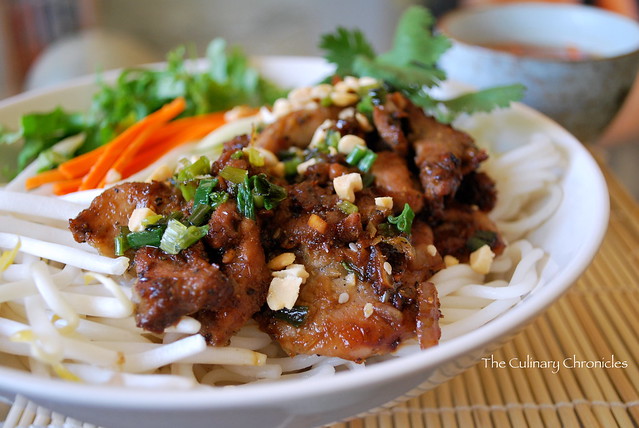
Bún Thịt Nướng (Vietnamese Grilled Pork over Vermicelli Noodles)

Bún Thịt Nướng (Vietnamese Grilled Pork over Vermicelli Noodles)

Our Mom was THE BEST cook…..seriously. She had a knack of creating such delicious flavors out of the most modest ingredients. And like most Vietnamese mothers, along side your serving of dinner, you would get several quick-tongue remarks and sharp attitude. 🙂

Lately, I have been finding myself missing my Mom a lot. And when those times come, I tend to gravitate towards recreating dishes and flavors that came out of her kitchen. Truth be told, most of my “mom-meal knock offs” aren’t 100% authentic. But that sure isn’t do to lack of trying! She was so quick maneuvering around the kitchen–throwing a little of bit of this and a little bit of that into pans that we could never keep up. Let’s not even begin to get into how she never measured!

So, on one recent weekend, I found myself recreating a meal that we often had growing up– Bún Thịt Nướng or Vietnamese Grilled Pork over Vermicelli Noodles. It’s not a dish that I eat (or more like “order“) often these days but when I do get the chance to enjoy it, I am reminded of how it really is a great depiction of Vietnamese cuisine. An extremely savory and mutli-layered flavor protein, combined with tons of fresh herbs, pickled veggies, cold noodles, various textures, and all enhanced by a spicy nước chấm (dipping sauce). And like many Vietnamese dishes, Bún Thịt Nướng is not difficult to make but it does take some time preparing as there are many steps and components to the dish.

I spend most of the time below describing steps to preparing the pork so if you have any questions, about the condiments in particular, feel free to shoot me an email. Since I was too lazy to pull out the grill, I ended up using my tried and true All-Clad grill pan to cook the pork. It worked fairly nicely but if you want the true authentic flavor, I’d recommend using an outdoor grill with with one of those wire mesh grilling baskets. You can pick one up for really cheap at most Asian grocery stores. You can’t beat the slightly charred flavor produced by cooking it that way. Plus, if you’re ever in Việt Nam, you’ll see that it’s the way my peeps do it.

I was quite pleased with the final dish. The warm grilled meat over the cold veggies and noodles are a perfect pairing–particular for warm summer days. And although I know it wasn’t exactly like Mom’s, I am sure she would have been quite proud.

Until next time Friends……Always cook with your heart 🙂

________________________________________________

Bún Thịt Nướng
Serves approximately 4-5

Ingredients:

Thịt Nướng (Pork)
2 Tablespoons Fresh Garlic, minced
3 Tablespoons Shallots, minced
3 Tablespoons Lemongrass, very finely minced (sả bằm)
2 Green Onions, chopped
3 Tablespoons Cilantro, finely chopped
1 Tablespoon Brown Sugar
1 Tablespoon Honey
1 Tablespoon Fish Sauce (nước mắm)
2 Tablespoons Soy Sauce
1 Teaspoon Fresh Cracked Pepper
1 Pound Pork Shoulder, sliced into 2-3 inch strips


Accouterments
1 Package Vermicelli Noodles, prepared according to package directions
1.5 Cups Slightly Pickled Carrots and Cucumbers*
2 Cups Fresh Lettuce, roughly chiffonade
1.5 Cups Fresh Bean Sprouts
1 Cup Fresh Cilantro Leaves
½ Cup Roasted Peanuts, crushed
½ Cup Green Onion infused Oil (hành mơ)**
1½ Cups Dipping Sauce (nước chấm)***

Thịt Nướng (Pork): In a large bowl, add honey, fish sauce, soy sauce, and sugar. Mix until the sugar is dissolved. Add the rest of the marinade ingredients to combine. Add pork and mix to ensure that the meat has been thoroughly covered. Refrigerate for 30-45 minutes.

While pork is marinating, prepare the accouterments:

*Pickled Carrots and Cucumbers: Cut carrots and cucumbers into small matchsticks and place in a small bowl. Cover them with Rice Wine Vinegar and a pinch of Sugar.
*Scallion Oil (hành mơ):
In a sauté pan, slowly heat ¼ cup of canola oil. Add ½ cup chopped scallions. Cook the scallions on very low heat until they are wilted but still bright green. Approximately 2-3 minutes. Pull from heat and set aside.
*Dipping Sauce (nước chấm):
Combine ½ Cup Fish Sauce, ½ Cup Sugar, ½ Cup Fresh Lime Juice, ¼ Cup Warm Water and stir until sugar is dissolved. Add 1 Teaspoon Chili Paste. Adjust amounts to desired to taste.

Remove pork from the refrigerator 5-10 minutes before grilling to take the chill off the meat. Heat your grill pan to medium-high and lightly cover with cooking spray (or prepare outdoor grill). Grill meat for approximately 1-2 minutes on each side until browned. Since the meat is thin, it does not take long to cook.

To Assemble: In a bowl, place the cooked vermicelli noodles, lettuce and bean sprouts. Plate the warm grilled pork on top of the bowl, alongside with the pickled veggies and cilantro. Brush the meat with the scallion oil and sprinkle with the crushed peanuts. Serve with your preferred amount of nước chấm.


Appetizers/Small Plates · Pork · Seafood · Vietnamese

Chả Giò (Vietnamese Egg Rolls)


Tết had just rolled around the corner and I had not been able to properly prepare for it. Traditional things that the Lunar New Year calls for such as scrubbing down the house and endless cooking of Vietnamese dishes just didn’t seem to fit in my schedule. I know, I know….BAD Nam 😦

Growing up, Tết would be a huge celebration at our house with extended relatives coming over for TONS of great food, catching up, praying/giving respect to ancestors, playing Tết games like Bầu Cua Cá Cọp, and of course every kids favorite–getting Lì Xì. Lì Xì are monetary gifts in red envelopes and symbolizes good luck and wishes for the new year. With all that familial and cultural history, you can imagine, I felt pretty bad for not sufficiently preparing for Tết.

Customs and nostalgia tugged at my heart and I felt compelled to make at least one traditional Vietnamese dish for dinner one night. Lucky for me, Tết is typically celebrated for a few days, so I wasn’t too late to add to the luck and good cheer for the upcoming year. 🙂

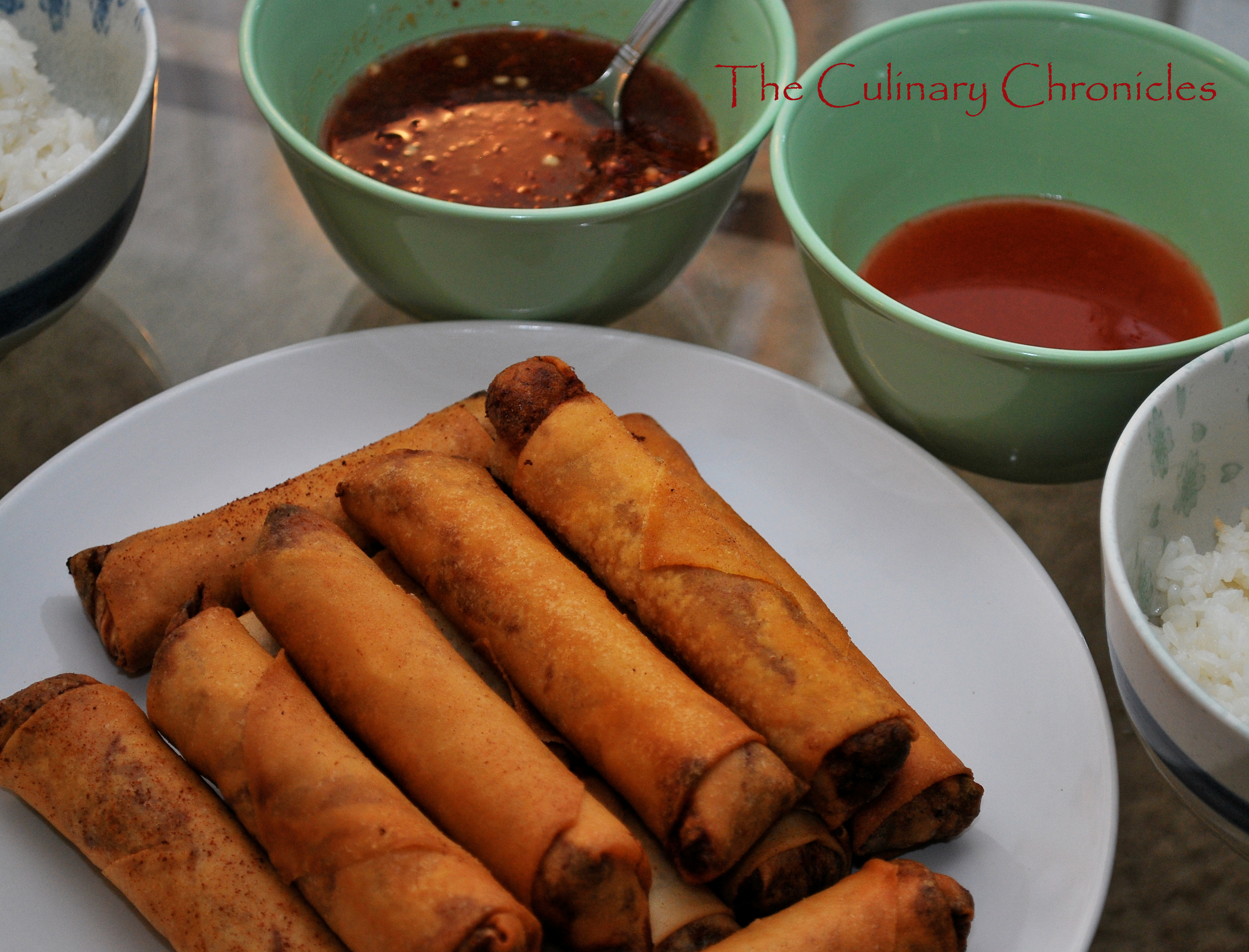
It’s days like these that make me miss my mom even more than normal. So, I picked something simple but a dish that would make her proud– Chả Giò. Chả Giò are Vietnamese egg rolls and can vary in preparation by the region of the country you are from. Traditionally made with rice paper, Chả Giò are now often made with wheat flour sheets—like its Chinese counterparts.

You can enjoy Vietnamese egg rolls with cold vermicelli noodles but I like mine with jasmine rice and fresh lettuce. But hey—enjoy them any way you’d like. 🙂

Regrettably, because this preparation is based from my mom’s own creation, I won’t be sharing this recipe. Sorry folks—some things are better kept secret! 🙂

But to all of you, I wish you the best that the Year of the Tiger has to offer!

Chúc Mừng Năm Mới!


Chả Giò all rolled up and ready for deep frying.


Chả Giò in Canola Oil over medium-high heat.


Serve Chả Giò with Jasmine Rice and your choice of dipping sauces. I whipped up a traditional Nước Chấm and used a store bought Sweet Chili Sauce.


So friends, what are some of your new year traditions???? 🙂