Breads

Pain d’Epi (Wheat Stalk Bread)

Pain d'Epi


Stick a fork in me….I’m done.

And by “done”, I mean that I am DONE searching for a reliable bread recipe that is relatively easy, fuss-free, and above all—tasty. Because I found the recipe of my dreams from Jeff Hertzberg and Zoë François—authors of Artisan Bread in Five Minutes.


Pain d'Epi


Their objective was wonderful really…..to create amazing home baked bread with only 5 minutes of “active preparation”. 5 Minutes and NO Kneading! The dough can also sit in your fridge for up to 2 weeks which means fresh baked bread whenever your heart desires 🙂


Pain d'Epi


Their master recipe dough can be formed into any shape that you like. I usually lean towards a boule or baguette as it’s the quickest to shape. But when I want the maximum amount of “crunch” and “crust”, I shape a Pain d’Epi—or “wheat stalk” bread. I love how you can just tear off a section of the Pain d’Epi and essentially have your own little mini baguette. Wonderfully crunchy texture on the outside and soft-spongy interior. DEEEEE-luxe.

My Bread Baking Life will never be the same 🙂

_________________________________________

Pain d’Epi (Wheat Stalk Bread)
Adapted from Artisan Bread in Five Minutes a Day

Master Dough Ingredients:

6½ Cups All Purpose Flour
1½ Tablespoons Active Yeast
1½ Tablespoons Kosher Salt
3¼ Cups Warm Water
Olive Oil
Additional Flour (for dusting)
1 Cup Hot Water (for baking)

Add the yeast to the water. Allow it to activate and get foamy—about 10 minutes.  In a large bowl, combine the flour and salt together. Add the yeast/water mixture and stir it until all of the flour is incorporated into the dough. The dough will be really shaggy and rough. You can also do this step in a stand mixer but be sure to only “mix” until the ingredients have combined. You are not looking to knead the dough.

Transfer dough to a large container (at least a 5 quart) that has been greased with olive oil. Put the lid on the container but do not seal it completely as you need to allow some of the gases to escape during the proofing process. Allow the dough to sit at room temperature for about 2 hours to rise.  At this point, the dough should be really bubbly and would have filled the majority of your container. Do not punch down the dough—it will deflate the air bubbles. Seal the lid completely and refrigerate. The dough can be used after a few hours or can be stored for up to two weeks.

When you are ready to make your bread, uncover your container and dust the surface of the dough with a little flour. Pull out desired loaf amount and cut off with floured kitchen shears. Lightly flour the dough and form a ball by folding the dough over on itself several times. Cover the dough and allow to rest for about 30 minutes.

If using a baking stone, place it in the middle rack of the oven and place an empty broiler pan on the rack directly below it. Preheat oven to 450 degrees.

Once rested, take the dough and gently shape it into an oval. Fold the dough in thirds (like a letter) and bring in one side and gently press it into the center. Bring up the other side and pinch the seem closed. Stretch the dough very gently into a log. You don’t want to compress the air out of the dough. If it resists your pulling on it then let it rest for just a moment to relax the glutens. Continue to work the dough until you have a nice thin baguette. It is okay if you let the dough rest a few minutes and then come back to it to give it a gently stretch.

Cover a large baking sheet with parchment paper. Sprinkle corn meal in a low row and place your baguette on top of it. With your kitchen scissors cut the dough from one end at a 45 degree angle until you are about a 1/4″ from the cutting board. Being careful not to cut all the way through the dough. Lay the piece you’ve cut over to one side. Continue to cut in this fashion until you’ve reached the other end.

Once completed, slide the formed Pan d’Epi onto the baking stone in the preheated oven. If you’re not using one, place the entire baking sheet on the middle rack. Put a cup of hot water into the broiler tray below the baking stone/baking sheet and quickly shut the door. Bake for about 30 or until it is nicely browned. Allow to cool completely on racks. If you cut into it too early, you may get a tough crust and a gummy interior.

**You can find step-by-step photos on how to form a Pain d’Epi here.

Drinks

My, Oh-My….MAI TAI Time!

Mai Tai


Years ago I was lucky to have been a staff member for Semester at Sea. Working with college students, sailing the world…..it was an incredible, life changing experience.

I got the chance to revisit the motherland since it was one of our port stops and travelled around with my friends from the ship.  We stayed at a quaint beach “resort” in the coastal city of Mũi Né to take in all the wonders that Việt Nam had to offer. One night, we had dinner on the lanai with the cool ocean breeze blowing and the sounds of the water lapping on the shore. Just bliss. With our amazingly fresh seafood dinner, my friends and I decided to order Mai Tais. I know….Mai Tais aren’t exactly a cocktail you think of partaking in when you’re in Việt Nam. But hey, the restaurant was also randomly playing the soundtrack to Dirty Dancing throughout dinner—so Mai Tais weren’t exactly too crazy for the scene.

It took a long time for our drinks to be brought to our tables but with one sip we completely forgot about the long wait. They were A-M-A-Z-I-N-G! Deliciously fresh in flavor, well balanced, and strong! Who knew I had to travel all the way to Việt Nam to have the BEST Mai Tai of my life!

Needless to say, we enjoyed several more throughout our stay in Mũi Né—in fact, they even made a few of them “to go” for us to enjoy during the ride back to Sài Gòn. Seriously. They poured the Mai Tais in plastic bags, stuck a straw in them, and tied them up with rubber bands. Think of “juice pouches”…..but WAY better. My peeps are quite ingenious.


(Left) Gail, Joy, and Joe enjoying some Mai Tais. (Right) Kate posing with our Mai Tai pouch.


I couldn’t figure out what made their Mai Tais so darn delish until I heard them puréeing something while we were sitting at the bar. Then it hit me…..they were using freshly pressed pineapple juice! DOH! NO WONDER! Tropical fruits in Việt Nam are amazing and the pineapples are no exception. They are so fragrant and sweet. So you can only imagine how incredible a cocktail will be when fresh pineapple juice is used. OH–MY—GAWD.


Mai Tai


With the rainy weather we’ve been having, I wanted to mix up some Mai Tais to urge on the sunshine.  And although I didn’t have pineapples from Việt Nam on hand, I did have some fresh Hawaiian Gold Pineapples that I puréed. By using fresh pineapple juice and tons of citrus, these Mai Tais were almost as good as the ones back in Mũi Né. And let’s be honest, who doesn’t love sipping on a pretty drink with a paper umbrella in it?

Here’s to finding delicious things in the most random place–Salut! 🙂

Note: The original Mai Tai from the 1940s did not contain pineapple juice……Boy, they sure were missing out!

__________________________________________

Mai Tai
Serves 1

Ingredients:

3 Ounces Fresh Pineapple Juice (or bottled)*
1 Ounce Orange Juice
2 Ounces Light Rum
1½ Ounces Dark Rum
1 Ounce Grand Marnier (or Cointreau)
½ Ounce Fresh Lime Juice
½ Ounce Fresh Lemon Juice
Dash of Grenadine
Crushed Ice

Fill a large cocktail glass with crushed ice. Drizzle grenadine in bottom of the glass.

Fill a cocktail shaker with ice. Add pineapple juice, orange juice, light rum, Grand Marnier, lemon juice, and lime juice. Vigorously shake for 10-15 seconds.

Hold a large spoon over the grenadine. The spoon should be inside the cocktail glass, against the edge, facing down. Very slowly pour the liquids from the shaker over the back of the spoon allowing it to settle on top of the grenadine. Float the dark rum on top by following the same “spoon method” as described above. Garnish with fruit, straw, and paper umbrella.

*To “juice” or press your pineapples, cut the fruit into large chunks. Place them in a blender and puree until liquefied. Strain the liquids to remove any fibers.

Breads

Focaccia with Caramelized Onion, Sundried Tomato & Rosemary

Focaccia with Caramelized Onion, Sundried Tomato & Rosemary


Remember that bread-baking kick I was on a few weeks ago?

Yup……still on it.

Told you I needed an intervention. 🙂

But in my defense, I think Focaccia could be considered almost “pizza-like”.


Focaccia with Caramelized Onion, Sundried Tomato & Rosemary


I stumbled upon this recipe from Cookin’ Canuck awhile back and was happy to give it a spin. Dara’s site is fabulous and chock-full of delish recipes! And this focaccia is no exception.

It came together quite easy and the flavors were well balanced.  I didn’t have any fresh tomatoes on hand and decided to substitute them with sundried tomatoes—a tasty alternative! Just be sure to allow the focaccia to bake for 2/3 of the cooking time before adding the sundried tomatoes—or else they’ll burn! And that is definitely No Bueno.

As for my bread-baking obsession, I assure you that it’s currently under control.

Well….temporarily at least. I am ALL out of yeasts. 🙂


_________________________________________________

Focaccia with Caramelized Onion, Tomato & Rosemary
From Cookin’ Canuck

Ingredients:

1 Package Dry Yeast
1 Cup Warm Water
1 Teaspoon Honey
2 1/2 Cups All-Purpose Flour
2 Teaspoon Kosher Salt, divided
1/2 Cup plus 1 Tablespoon Olive Oil, divided
1 Large Onion, thinly sliced
1/2 Cup Sundried Tomatoes, sliced
2 Sprigs Fresh Rosemary, needles removed from stem
1/3 Cup (packed) Parmesan Cheese, finely grated

In a medium bowl, stir together yeast, warm water, and honey. Let rest until yeast blooms and bubbles form on top, about 10 minutes. Stir in flour, 1/4 cup olive oil and 1 teaspoon kosher salt. Turn the dough onto a well-floured surface and knead until dough is smooth, 5 to 10 minutes. Place dough in a lightly oiled bowl, cover with a kitchen towel or plastic wrap, and let rest in a warm place until dough doubles in size, about 1 hour.

Preheat oven to 450 degrees F.

Remove dough from bowl and press it into a lightly oiled 9- by 13-inch baking sheet until it touches the edges. Using your finger, poke holes all over the dough. Drizzle the dough with 2 tablespoons olive oil. Let rest until the dough becomes puffy, about 20 minutes.

Heat 1 tablespoon olive oil in a large skillet set over medium heat. Add onion slices, cover and cook until onion is golden brown, stirring occasionally, about 20 minutes.

Top the dough with caramelized onions, rosemary, Parmesan cheese, and salt. Drizzle with remaining 2 tablespoons olive oil.

Bake for about 10-15 minutes and add sundried tomatoes. Return to the oven and continue baking until the focaccia is golden brown, about another 5 minutes. Remove from oven and allow to cool on a rack. Cut into pieces and serve.

Vegetables/Vegetarian

Channa Masala (Spicy Chickpea Curry)

Channa Masala (Spicy Chickpea Curry)


Here we are……the final installment to my Indian Foodventure. And let’s be honest. This isn’t a bad way to end it—-with Channa Masala!

Essentially Channa Masala (also seen spelled as “Chana“) is an Indian spiced Chickpea Curry. You’ll find several different preparations of Channa Masala but I like mine to be spicy and in a thick tomato sauce. Which is why the recipe from Eat, Live, Run suited me so well.

As a legume, Chickpeas are chopped full of protein and cholesterol-lowering fiber. It’s hearty and filling and I find this particular dish to be a wonderful vegetarian option. Even I don’t miss the “meat” while enjoying this!


Channa Masala (Spicy Chickpea Curry)


Jenna of Eat, Live, Run does an amazing job chronicling a step-by-step process to create her version of Channa Masala. It was easy to understand and I followed every step to the “T”! I really believe the pince step is crucial to the process and really intensifies the seasonings. DO NOT skip it! The flavors were incredible—deep, smoky, and spicy. Just how I like my Channa Masala. And best of all, it tastes even better the next day!

This concludes my Indian Foodventure! It was my first endeavor but I know I will be trying my hand at it again. And if you are anything like I was, I hope you’ve seen that some Indian dishes aren’t as intimidating as you may think. So get in your kitchens and whip up some delicious Indian foods! 🙂

______________________________________

Channa Masala (Spicy Chickpea Curry)
From Eat, Live, Run

Ingredients:

2 15 Ounce Cans Chickpeas, drained and rinsed
2 Garlic Cloves, smashed and chopped
1 Onion, chopped
1 Jalapeno Pepper, seeded and chopped
1 Inch Knob Fresh Ginger, peeled and chopped
1 15 Ounce Can Diced Tomatoes
3 Tablespoons Tomato Paste
1/2 Lemon
1 Tablespoon Ground Coriander
1 Teaspoon Ground Cumin
1/2 Teaspoon Sea Salt
1 Teaspoon Garam Masala
1/4-1/2 Teaspoon Cayenne Pepper
1 Teaspoon Ground Turmeric
2 Tablespoon Butter

In a large cast iron skillet, heat the butter. Once melted, add the onions and cook for about 15 minutes on medium low heat, or until golden brown. Once the onions have caramelized, add the garlic, ginger and jalapeno and stir well. Cook for about two minutes or until it starts to smell like heaven on earth. Add the tomato paste and pince*. This is very important and if you don’t do it right your dish is pretty much doomed. No pressure. Add the coriander, cumin, cayenne and tumeric and stir well. Then add the diced tomatoes, chickpeas and garam masala. Cook for about five minutes or until the chickpeas have heated through. Finish with a squeeze of lemon and top with plain yogurt and cilantro if desired!

**To pince is essentially a browning process. For this recipe, after you add the paste, stir it well into the other ingredients. Next you’ll want to flatten the ingredients into one layer on the bottom of the pan. Turn up the heat and allow the sugars to cook down for a few minutes and create a really nice brown crust on the bottom of your pan. It may look like it’s burnt but it’s not. Jenna describes it as smelling like “pizza” —and it does!

Vegetables/Vegetarian

Saag Aloo (Spinach and Potatoes Curry)

Saag Aloo (Spinach and Potatoes Curry)


The third installment of my Indian Foodventure—–Saag Aloo or Spinach & Potatoes Curry.

Saag is a typically made with spinach or other leafy greens and is cooked down with spices until it reaches a smooth texture. Often you’ll find Saag prepared with Paneer–a fresh Indian cheese. Paneer isn’t difficult to make and comes together with only a few ingredients. However, it does take some time for the curds to come together and firm up. As such, I opted to prepare my Saag with fried Aloo (potatoes)—which is another common pairing.


Saag Aloo (Spinach and Potatoes Curry)


I adapted a recipe from Saveur by replacing the paneer with fried potato cubes and reducing the amount of heavy cream by 2 tablespoons. The final product resulted in a delightful vegetarian dish with great flavors from the garam masala. Absolutely a winning recipe!

A little side note: This is definitely one of those dishes that may look a tad unappetizing but is darn tasty! 🙂

Monday’s Post: The conclusion of our Indian Foodventure– Channa Masala (Spicy Chickpea Curry)

_________________________________________________

Saag Aloo (Spinach and Potatoes Curry)
Adapted from Savuer

Ingredients:

1 Large Russett Potato, peeled and cubed
1 Inch Piece Ginger, peeled and chopped
3–4 Cloves Garlic, peeled and chopped
1 Serrano Chile, stemmed and chopped
8 Cups Spinach, washed, trimmed, and finely chopped
1/2 Teaspoon Garam Masala
1-2 Pinches Cayenne
1/4 Cup Water
4 Tablespoon Heavy Cream
Kosher Salt
Vegetable Oil to fry Potatoes, plus 1 Tablespoon

Heat a large skillet with vegetable oil. Using a paper towel, dry the potato cubes. In batches, fry the potato cubes until golden brown all over, about 4–6 minutes. Transfer potatoes with a slotted spatula to a plate covered with paper towels and set aside. Season with kosher salt.

For the spinach, put ginger, garlic, chiles, and 1/4 cup water into a blender and purée to a smooth paste. Place a large skillet with 1 Tablespoon oil on the stove and heat over medium-high heat. Add ginger–garlic paste and cook, stirring with a wooden spoon for about 30 seconds. Add spinach and cook until leaves wilt. Continue to stir often. Reduce heat to medium-low, cover, and cook until spinach is very soft, about 10-15 minutes.  Stir in garam masala, cayenne, and cream.

Add fried potatoes to the spinach and cover skillet. Continue cooking until liquid thickens and spinach is silky soft, about 15 minutes more. Check for seasonings and add additional kosher salt or cayenne as needed. Serve with Naan or rice.

Poultry

Chicken Tikka Masala

Chicken Tikka Masala


Without a doubt, Indian fare is one of my favorite cuisines. I love the deep layers of flavors and spices—delicious.

But the reasons why I love it so much is also why I have never really prepared Indian food before. I was intimidated. Totally overwhelmed.

Of the scores of recipes I’ve reviewed, the ingredient lists have always thrown me off. A huge laundry list of spices—-all of which I knew were integral to the deep flavors that I loved so much. So whenever I had hankerings for Channa Masala, Curried Paneer, Samosas—-I would head straight to my favorite Indian spot and order up the goodies.

But then the other day I became set on making Homemade Naan for the first time. And in this gal’s opinion, very little goes better with Naan than Chicken Tikka Masala. MMMMM! This popular chicken curry with it’s creamy, tomato sauce is easily my favorite Indian dish. Is it authentically Indian? I don’t think so…..I’ve actually heard that it was created in London. Nonetheless, I love it.

I recalled an episode I saw of America’s Test Kitchen when they prepared Chicken Tikka Masala. It seemed so simple and relied on Garam Masala as the primary spice agent. As Garam Masala is a blend of a variety of spices, there was no need for me to purchase a ton of different seasonings! P-E-R-F-E-C-T!


Chicken Tikka Masala


While I was preparing this dish, the aromas quickly filled the entire house—- and it smelled amazing! It was fairly easy to prepare and was really flavorful. I was worried that the boneless/skinless chicken would be dried out due to the cooking method. But I was pleasantly surprised to find the meat to be quite moist—probably as a result of the generous coating of yogurt that sealed in the juices. The photos here show the Chicken Tikka Masala served with a Turmeric Rice but Basmati would be perfect with it, too.

In the end, we had a lot of sauce left over and I didn’t want to waste all of that great flavor. So the next day, I lightly grilled some prawns and threw them into the sauce. It was really delicious and became a wonderful seafood option!

All in all—I was quite happy with this Chicken Tikka Masala and will definitely make it again! My Host Family in Chennai would be proud 🙂

*Friday’s Post: Saag Aloo (Spinach and Potatoes Curry)


________________________________________

Chicken Tikka Masala
From America’s Test Kitchen: Cooking for Two

Ingredients:

For the Chicken
1/2 Teaspoon Garam Masala
1/8 Teaspoon Cayenne Pepper
1/2 Teaspoon Salt
Two (6 to 8-ounce) Boneless, Skinless Chicken Breasts, trimmed
1/2 Cup Plain Yogurt
1 Tablespoon Vegetable Oil
2 Garlic Cloves, minced
2 Teaspoons Grated or Minced Fresh Ginger

For the Sauce
One (14.5-ounce) Can Whole Tomatoes
2 Tablespoons Vegetable Oil
1 Small Onion, minced (about 1/2 cup)
1 Garlic Clove, minced
1 Teaspoon Grated or Minced Fresh Ginger
1 Small Serrano Chile, stemmed, seeded, and minced
1 1/2 Teaspoons Tomato Paste
1 1/2 Teaspoons Garam Masala
1 Teaspoon Sugar
Salt
1/3 Cup Plain Yogurt
2 Tablespoons Chopped Fresh Cilantro


Make the chicken
1. Combine the garam masala, cayenne, and salt in a bowl. Pat the chicken dry with paper towels, then coat the chicken thoroughly with the spices, pressing to help them adhere. Place the chicken on a plate, cover, and refrigerate for 30 to 60 minutes. Whisk the yogurt, oil, garlic, and ginger together in a medium bowl, cover, and refrigerate until needed.

Make the sauce
1. Process the tomatoes with their juice in a food processor until pureed, about 15 seconds. Heat the oil in large saucepan over medium heat until shimmering. Add the onion and cook until softened and lightly browned, 5 to 7 minutes. Stir in the garlic, ginger, chile, tomato paste, and garam masala and cook until fragrant, about 30 seconds.

2. Stir in the processed tomatoes, sugar, and 1/4 teaspoon salt, and bring to a boil. Reduce the heat to low, cover, and simmer, stirring occasionally, for 15 minutes. Off the heat, stir in the yogurt and cover to keep warm.

3. Meanwhile, adjust an oven rack to be 6 inches from the broiler element, and heat the broiler. Line a rimmed baking sheet with foil and top with a wire rack. Using tongs, dip the chicken into the yogurt mixture so that it is thickly coated and arrange on the prepared wire rack; discard any excess yogurt mixture. Broil the chicken until the exterior is lightly charred in spots and the thickest part of the breasts registers 160 to 165 degrees on an instant-read thermometer, 10 to 18 minutes, flipping the chicken halfway through cooking.

4. Let the chicken rest for 5 minutes, then cut into 1-inch chunks. Stir the chicken pieces into the warm sauce (do not simmer the chicken in the sauce). Stir in the cilantro, season with salt to taste, and serve.

NOTE: I’m not sure why, but the ingredients shown on the episode of ATK are slightly different than what is actually published in their cookbook. What you see here is the cookbook method.

Breads · Side Dish

Whole Wheat Garlic Naan…..Where it all started.

Whole Wheat Garlic Naan


I blame it ALL on this Garlic Naan.

I had seen a photo of it on Tasty Kitchen awhile back and I’ve been obsessed with it every since. And when I finally got the chance to try it, I went nuts–I was out of control! I went from making just one dish to creating a full blown Indian dinner! I guess I figured if I was going to take the effort to make Naan, I better go the extra mile to make some dishes to enjoy with it. 🙂

But perhaps now would be a good time to mention the fact that I’ve never really cooked Indian food before—so it was going to be quite a FoodVenture! The next few posts will be recounting the dishes I created and how it all came together.

But let’s turn our focus back to the Naan.


Whole Wheat Garlic Naan


Jessica from How Sweet It Is did a really great job covering Homemade Naan from Indian Simmer. The only thing I did different was that I used a stove top grill to cook the first side of the Naan before cooking the other side on an open flame. I would have definitely preferred to use a cast iron skillet per the instructions but have yet to replace my skillet that had rusted—-REALLY rusted. Eeew. And if you’re wondering, using an enamel-coated cast iron skillet won’t work either. Yup, I tried it.

But when everything was finished, I had really mixed feelings about the Naan. They did puff up pretty well when cooked over the open flame and were ok when I tasted them right away. But once they cooled, I found that the dough became really tough and loss some flavor. I’m not sure if it was due to my use of Whole Wheat Pastry Flour or if I overworked the dough prior to cooking it. When we warmed them up later on, they became pretty hard and crunchy—-in fact, it was more cracker-like than puffy Naan.

Still, I’m glad I gave it a go. I will DEFINITELY try this recipe again when I finally get my hands on a cast iron skillet because I think it would definitely improve the texture. I’ll also try it with AP Flour in hopes of getting a lighter product.

So even though this Garlic Naan didn’t work out so well for me this time, it did give me the motivation to create an entire Indian feast!

**Next Post:  Chicken Tikka Masala!

_____________________________________

Whole Wheat Garlic Naan
From Indian Simmer

Ingredients:

2 cups Wheat Flour (or AP Flour)
¾ teaspoons Baking Powder
½ teaspoons Baking Soda
½ teaspoons Sugar
¼ teaspoons Salt
½ cups Warm Milk
½ cups Yogurt
½ Tablespoons Oil, As Needed
Additional Optional Herbs And Seasonings To Flavor The Naan (See Note Below)

Note: The ingredient list includes the ingredients for the dough. You can flavor your naan with all kinds of herbs. I made cumin naan, garlic naan, butter naan, and some topped with cilantro.

Mix all the dry ingredients together and make a well of flour.

Mix milk and yogurt together and pour half of it into the well and slowly combine it together.

I don’t think there’s an exact amount of liquid that should be added to the exact amount of flour to make a perfect dough. So what I do is continue adding liquid slowly and combining it all together slowly until a soft dough is made. The dough should be soft enough for you to be able to dig your finger into it without applying any pressure. If dough sticks to your hand too much, then use little bit of oil on your hands and then punch into the dough.

Cover with a damp cloth and let it sit in a warm place for at least 2 hours.

After a few hours, dust your working board, take out the dough and knead it for about 2-3 minutes. Divide the dough into smaller balls (in this case you should get about 8 balls to make naans).

Dust the board again and flatten the balls to make bread that is a little thick and elongated.

Now sprinkle one side of the bread with your desired flavor. I made cumin, minced garlic, chopped cilantro and some simple butter naans.

Brush the other side with water.

Heat a thick-bottomed skillet or a wok or any heavy-bottomed pan with a lid. Once it is nicely hot, place the naan wet side down (it will stick) and cover it with a lid.

Let it cook for about 30 seconds or until you see bubbles on it. Now cook the other side of the naan over a direct flame on the burner with the help of tongs. When you see some charred brown spots then you know that the naan is done.

Smother a good amount of butter on your naans and when you taste them, you’ll know what a peaceful life means!

Vietnamese

Delicious Vietnam #11 Roundup!


It’s been my absolute pleasure to host this month’s Delicious Vietnam which was founded by Anh of A Food Lover’s Journey and Kim and Hong of Ravenous Couple. I am thankful to have met new bloggers through this process and I am greatly excited to see a thriving love and passion for Vietnamese cuisine!

This month features mouth-watering dishes that vary from Savory to Sweet delights. Get those tummies ready because here we go!


Savory Fare:


From Hanoi, Vietnam: Chi Anh Dao of Door To My Kitchen shares Vietnamese Pan-Fried Tofu Chi Anh Dao says:

“The best way to eat Fried Tofu is fresh out of the pan – golden, crispy and bubbling hot, dipped into Vietnamese fish sauce with chopped scallions. I could eat it just like that with white rice, without anything else.”

Her amazingly descriptive post of the sounds, smells, and memories connected to this traditional dish will make you run to your kitchens to fry plates of tofu!


From Mountain View, CA and Ann Arbor, MI.: The dynamic team of Rau Om shares Caterpillar Bánh Tét (Bánh Tét Sâu Bướm). They say:

“Working from a caterpillar photo, we knew we needed 3 colors: green, orange and black. Green and orange colors were easy: pandan leaf extract and gấc (spiny bitter gourd) are 2 common Vietnamese natural coloring ingredients. Black was a bit more challenging. We gravitated toward squid ink to color the sticky rice black, but we were worried about introducing a seafood taste to our bánh tét. Our other option we decided on was nếp than (black glutinous rice).”

This whimsical and creative approach to Bánh Tét would be a great way to celebrate the New Year!


From San Jose, CA: Pauline of Sassy Savvy Travel shares Mom’s Lemongrass Chicken (Gà Xào Xả). Pauline says:

“The perfume of lemongrass sauteed with garlic and onions always made my mouth water.  My mom also knew how much I loved the crisp on the slightly seared chicken.  It was simple for her to cook, it made the house smell wonderful, and it tasted lovingly homemade.”

Definitely mouth watering! I can already smell the delicious aromas of the lemongrass!


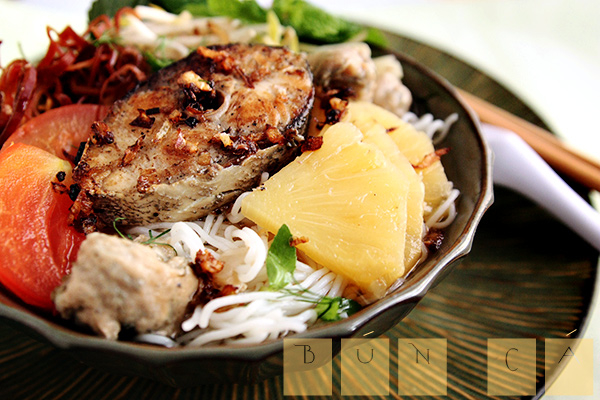
From Los Angeles, CA: Hong and Kim of Ravenous Couple shares Vermicelli Fish Soup (Bún Cá). They say:

“It’s a simple vermicelli noodle soup often with a large steak or filet of meaty white fish as well as fish paste meatballs.  The broth is pork or chicken stock sweetened with pineapple and tomatoes.”

This colorful dish epitomizes the flavors of savory, sour, sweet—I can’t wait to give it a try!


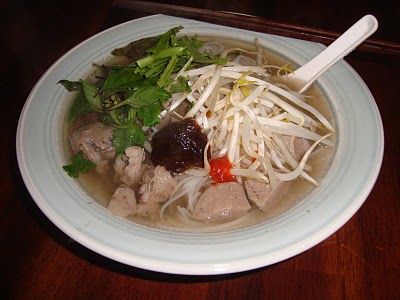
From Virginia: Julie of Beginner Mom on the Run shares Beef Phở. Julie says:

“It’s steaming hot and like a aromatic facial when you lean over for the first bite. It’s ideal for any time during the day or night. It will keep your belly full for hours and is light and energizing from the assortment of fresh herbs you personalize you bowl with: basil, bean sprouts, cilantro, culantro, and green onions.”

I love that Julie chars her yellow onions and ginger to bring out an additional layer of flavors!


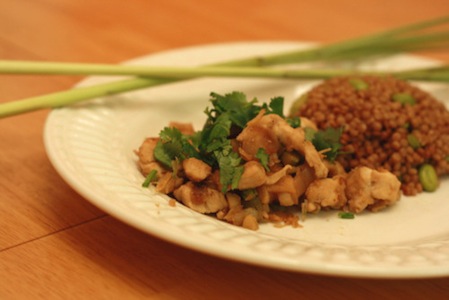
From San Diego, CA: Yours Truly of The Culinary Chronicles shares Vietnamese Chicken Glass Noodle Soup (Miến Gà).

“The key to my Miến Gà is homemade chicken stock—something I almost always have on hand.  That combined with a splash of what I call “Vietnamese Liquid Gold” and you will have a wonderful and clean broth for your Miến Gà.”

Whether you’re feeling under the weather or just need the warmth of comfort food, Miến Gà will be perfect for you!


Sweet Fare:


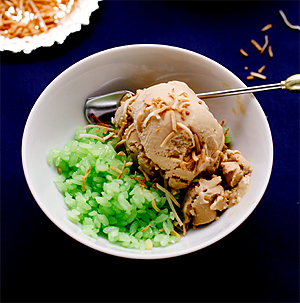
From Melbourne, Australia: Anh of A Food Lover’s Journey shares Coconut Ice Cream with Pandan Sticky Rice (Kem Xôi). Anh says:

“My favourite bit of kem xôi was the toasted coconut pieces, which have wonderful nutty and coconut flavor and aroma. I always believe that such addition was the key to make kem xôi special. It was the link to bind the ice-cream together with the sticky rice component of the dish. (And, who can disagree that pandan and coconut are borne for each other?)

Coconut AND Pandan? Now that’s a winning pair and I just love the various textures that this tempting dessert offers!


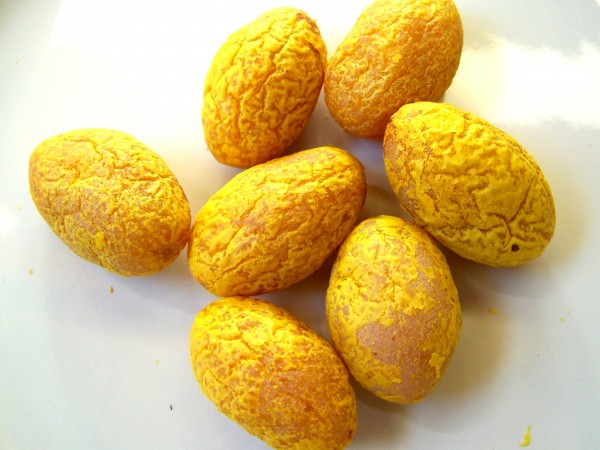
From Berkeley, CA: Mai of Flavor Boulevard discusses White Canarium or Chinese Olive (Candied Cà-Na). Mai says:

“The first nibble must be executed with caution. It’s firm and sound, with one big hard seed. No wonder the folks at home call the American football the cà na ball: they look and feel the same, only smaller. The flesh is dense like an old coconut’s meat, sour like lemon leaves, yes sweet like licorice blended with a dash of sea salt.”

According to Mai’s post, Cà Na also has some medicinal properties. Tasty and good for you!


From Texas: We welcome Mai’s mother of Flavor Boulevard who shares Candied Orange Peel with Pulp (Mứt Cam). She says:

“This candied orange can also be eaten with toast like marmalade, its sweetness stark, its texture crunchy, a natural minty sweep from the peel even gives it a healthy sense. They say eating it helps improving sore throats. I think making it helps improving patience.”

This Candied Orange Peel seems so inviting that I can almost smell the floral fragrance coming from my screen!


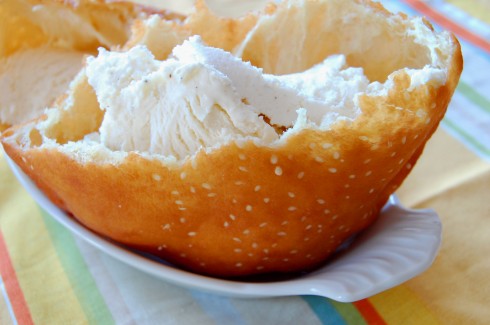
From Ashburn, VA: Rosa of saVUry and sweet shares Bánh Tiêu À la Mode. Rosa says:

“I gently tore the bánh tiêu in half and stuffed it with ice cream.  IT WAS GOOD.  Fried doughy goodness with cool creamy ice cream.  It doesn’t have to stop there, coconut ice cream with coconut shavings? Nutella? Durian (if you’re into that, not I)?  But for today the vanilla ice cream just hit the spot.  Another beautiful harmony of Vietnamese and western cuisine has been born.”

Fried goodness combined with a creamy, cold treat? Now THAT is a beautiful combination!


Thank You to everyone who contributed to this month’s delicious spread! I am thrilled by all of this diversity in Vietnamese cuisine and hope that this month’s Delicious Vietnam has inspired you to try out some of these dishes either in your own kitchens or from your local Vietnamese restaurants. 🙂 Cheers and Happy Eating!

Want to join this wonderful event? Come on board! Anh of A Food Lover’s Journey will be hosting for April. Submissions are due April 10th and should be sent to anhnguyen118@gmail.com For more information on hosting or past events, please visit Delicious Vietnam.

Poultry

Oven Braised Lemon Chicken

Oven Braised Lemon Chicken


I often braise chicken because it’s so easy and makes the meat deliciously juicy. And best of all—you only need to use one pot!


Oven Braised Lemon Chicken


This Oven Braised Lemon Chicken pairs thighs and drumsticks (my favorite chicken cuts) with the bright notes of lemon and capers to produce a wonderfully hearty dish. I also threw in some mushrooms since I’m kind of obsessed with them. But if you’re not a fan, leave them out. It won’t hurt my feelings 🙂


Oven Braised Lemon Chicken


Your finished product will be so beautifully tender and flavorful that you’ll be doing a little dance after your first bite. Because if you didn’t know….a little dancing while you eat helps with digestion 🙂

__________________________________________

Oven Braised Lemon Chicken
Serves 4

Ingredients:

8 Pieces Bone-In Chicken (I prefer thighs and drumsticks)
6 Whole Garlic Cloves
1 Small Onion, thinly sliced
2 Cups Crimini Mushrooms, sliced
4 Sprigs Fresh Rosemary
8 Lemon Slices, seeds removed
1 Dried Bay Leaf
2 Tablespoons Capers, drained
2 Cups Low Sodium Chicken Broth
½ Teaspoon Red Chili Flakes
3 Tablespoons Olive Oil
Kosher Salt and Black Pepper

Preheat oven to 350 degrees.

Liberally season the chicken with salt and pepper. In a large Dutch Oven heat olive oil to medium high. In batches, brown chicken pieces on both sides and transfer to a plate. Discard all but 2-3 tablespoons of left over grease. Lower heat to medium and add garlic cloves, cooking until lightly golden. Add onions and cook until all items are evenly browned. Add chili flakes and sauté for an additional minute.  Add mushrooms and sauté for an additional 2-3 minutes. Carefully add chicken stock and bring to a boil. With a wooden spoon, scrape the brown bits from the bottom of the pot. Return the chicken to the pot with the skin side up. Add lemon slices, bay leaf, capers, and rosemary sprigs–submerging those items underneath the liquid.  Place lid over the pot and put into the oven for 25-30 minutes or until chicken is done.

Carefully take the pot out of the oven. Remove rosemary sprigs, bay leaves and skim off and discard any fat and impurities from the juices. Check for seasonings and adjust with kosher salt and pepper as necessary.

Plate chicken with sauce and serve with fresh bread or other desired sides.

Desserts/Pastries

Chocolate Stout Cupcakes with Irish Cream Buttercream…..Slainte!!

Chocolate Stout Cupcakes with Irish Cream Buttercream


It’s that time of the year again. When you see tons of postings in honor of St. Paddy’s Day.

Green colored beer and desserts, shamrocks galore, corn beef recipes, Guinness braised meats, and more! As for me, I went all out last year with our Guinness Chocolate Cupcakes with a Baileys Ganache.


Chocolate Stout Cupcakes with Irish Cream Buttercream


I kind of went overboard with them. They literally SCREAMED St. Paddy’s Day with a decadent Guinness Beer cupcake, filled with a chocolate truffle, with spirals of green Baileys buttercream, topped with shamrock sprinkles and wrapped up in a bright green striped cupcake liner. PHEW! Now that is St. Paddy’s!


Chocolate Stout Cupcakes with Irish Cream Buttercream


Those cuppies were decadently delicious and I wanted to bring them back for this year’s St. Paddy’s Daybut a little more “understated”.

I went for the same moist, stout beer cupcakes and Irish cream flavored buttercream—-however, this time around I opted out of the truffle centers and put away my green food coloring. No need….their yumminess speaks for itself.


Chocolate Stout Cupcakes with Irish Cream Buttercream


I chose a simple large round tip to pipe the frosting this time– a Wilton 1A. But as “understated” as I was trying to keep things, I could not resist breaking out the shamrock sprinkles. After all, I don’t get to use them very often — and who couldn’t use a little more luck?

As for the end results……they were delicious! The dark stout beer adds such a subtle nuttiness to the chocolate cupcakes while the Irish Cream buttercream perfectly rounds out the flavors. And if done correctly, the buttercream is so smooth and rich— a dream to pipe out 🙂

So whether you want to go BIG with the GREEN theme or be a little more subtle, Chocolate Stout Cupcakes are definitely the way to celebrate St. Patrick’s Day!

And with that dear Friends, SLAINTE!!!

______________________________________________________

Chocolate Stout Cupcakes with Irish Cream Buttercream
Adapted from Smitten Kitchen
Makes 24 cupcakes

Ingredients:

Cupcakes:
1 Cup Stout Beer
1 Cup Unsalted Butter
¾ Cup Quality Unsweetened Cocoa Powder
2 Cups All Purpose Flour
2 Cups Granulated Sugar
1½  Teaspoons Baking Soda
¾ Teaspoon Salt
2 Large Eggs
⅔ Cup Sour Cream

Irish Cream Buttercream:
4 to 5 Cups Confections Sugar
2 Cups Unsalted butter, at room temperature
4 to 5 Tablespoons Irish Cream Liqueur

Preheat oven to 350°F. Line cupcake cups with paper liners.

Prepare the cupcakes: Put the butter with the stout beer in a sauce pan over medium heat and bring to a simmer. Whisk in cocoa powder until smooth. Cool slightly.

In a large bowl, whisk the flour, sugar, baking soda and salt. In a mixer bowl, beat the eggs and the sour cream together. Add the beer/butter/cocoa mixture and beat to combine. Add the flour mixture and beat briefly just to combine. Using a rubber spatula, fold the batter until completely combined, making sure to incorporate little pockets of flour on the bottom so that the batter is of equal consistency everywhere.

Fill the cupcake liners about 2/3 of the way if you want flatter cupcakes and 3/4 if you want domed. Bake for about 17 minutes, or until a toothpick inserted into the middle of a cupcake comes out clean. Cool completely to room temperature.

Prepare the frosting: In a large mixer bowl, whip the butter for several minutes until very light and fluffy. Slowly add about half of the powdered sugar a few spoonfuls at a time until incorporated. Slowly drizzle the Irish Cream and whip until combined. Add the rest of the powdered sugar until your desired consistency has been achieved.

Assemble: Fill a pastry bag and pipe buttercream on top of cooled cupcakes. Garnish with sprinkles or other adornments. Enjoy!

Note: This makes a lot of buttercream so that you can pipe large mounds on the cupcakes. If you prefer less on your cuppies, halve the amounts.